


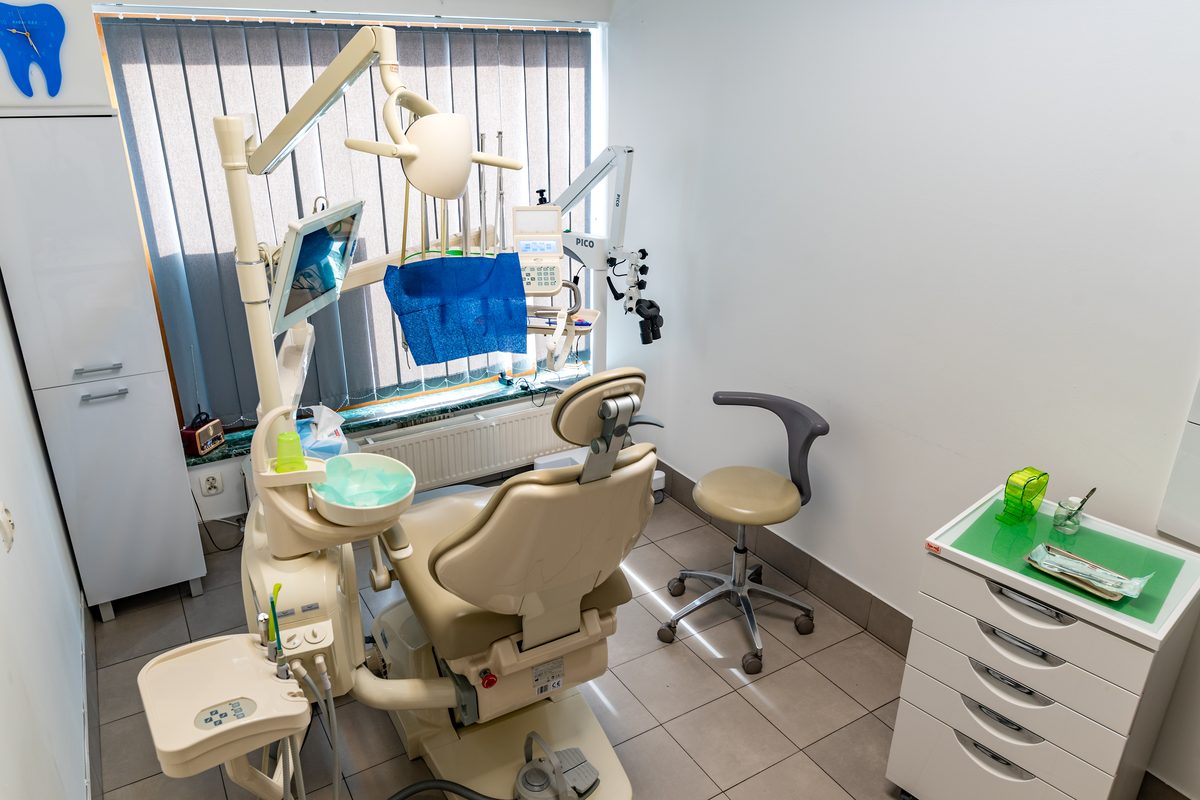
Endodontics is the dental specialty that treats the dental pulp and root canals. When decay or injury reaches the pulp (the tooth’s nerve), acute pain and inflammation follow – root canal treatment saves the tooth by eliminating the inflammation and preserving the natural roots. At Dobry Dentysta we use an endodontic microscope, which greatly enlarges the field of view and increases precision.
What does treatment include?
We adapt root canal treatment to the anatomy and complexity of each tooth. Single-canal teeth, such as central incisors or canines, are usually simpler to treat than multi-canal teeth, from premolars to second molars. Our standard is root canal treatment under a microscope for maximum precision. We also perform root canal re-treatment to correct previous treatment and, in more difficult cases, apicoectomy – a surgical procedure at the root tip.
Why choose our practice?
With an endodontic microscope we see the canals magnified up to 25 times, which greatly reduces the risk of missing any detail. To shape the canals we use nickel-titanium rotary instruments, which are flexible and much less prone to fracture than traditional steel instruments. Before treatment we perform a CBCT 3D scan to assess the number and course of the canals before we begin. Thanks to effective anaesthesia at the start of the visit, the treatment itself is virtually painless.
What does root canal treatment involve, step by step?
Treatment starts with radiological diagnostics. We then proceed to local anaesthesia and placement of a rubber dam – a latex sheet that isolates the tooth from the rest of the mouth and protects it from contamination. We then remove the diseased pulp, shape and disinfect the root canals under the microscope and finally fill them with a sealing material that closes the way for bacteria. Depending on complexity, treatment is completed in one or two visits.
What happens after root canal treatment?
After root canal treatment the tooth loses its natural nerve supply and becomes more prone to fracture, so in most cases we recommend reinforcing it with a crown or a post-and-core, especially on back teeth that take greater chewing forces. For a few days after treatment the tooth may be slightly tender when biting, which is a normal reaction of the tissues around the root tip. Regular check-ups confirm that the inflammation around the root has fully resolved.