


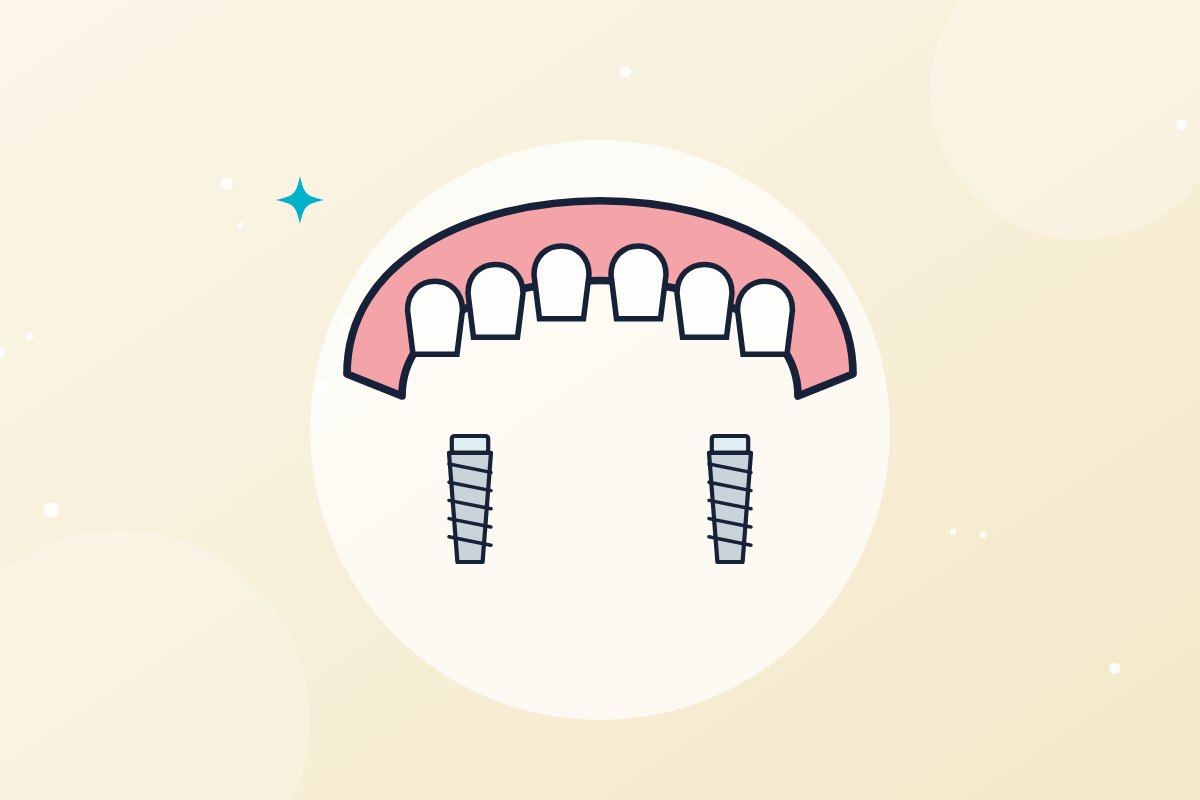
An overdenture is a removable denture that the patient takes out themselves, but which clips onto implants – usually 2 in the lower jaw and 2–4 in the upper jaw. It is much more stable than a conventional denture, lets you bite harder foods and limits bone loss. Treatment includes a CBCT scan, implant placement, 2–4 months of healing and fitting the denture onto attachments.
A loose lower denture is one of the most common problems for people without teeth. You do not always have to choose between a conventional denture and an expensive fixed restoration on many implants. We explain what an overdenture is, who it helps and how treatment works.
- Overdenture = a removable denture held in place by attachments on implants.
- Usually 2 implants in the lower jaw, most often 4 in the upper jaw.
- More stable than a conventional denture; fewer dietary restrictions.
- Implants limit bone loss under the denture.
- Attachments need periodic replacement, the denture every few years.
Contents
- What is an overdenture?
- Who is an implant-retained denture for?
- How does an overdenture differ from a conventional denture?
- What does treatment with an implant-retained denture involve?
- How long does an overdenture last?
- When is an implant-retained denture not a good choice?
- How much does an implant-retained denture cost in Rydułtowy?
- Summary
- Frequently asked questions
What is an overdenture?
An overdenture is a removable denture that the patient can take out themselves, but which is anchored on two or more implants. The implants act like press studs – the denture “clicks” onto them and does not move when speaking or eating. It is an intermediate solution between a conventional denture, resting only on the gums, and a fixed implant restoration that the patient does not remove.
| Option | Retention | Removable by patient | Number of implants |
|---|---|---|---|
| Conventional denture | suction on the gums and palate | yes | 0 |
| Overdenture | attachments on implants | yes | usually 2–4 |
| Fixed implant restoration | screwed or cemented | no | usually more |
Who is an implant-retained denture for?
An overdenture is a good option for people with no teeth in the upper or lower jaw, especially those whose conventional denture moves. It works well when there is not enough bone for a fixed restoration on many implants, for people for whom extensive surgery would be too demanding, and for patients with a strong gag reflex who are bothered by the palatal plate.
Read more about dentures on the page removable dentures, and about implants on the page dental implants.
How does an overdenture differ from a conventional denture?
An implant-retained denture is much more stable: it does not lift or slide when talking or chewing, so you can eat harder foods and speak with confidence. Implants transfer forces to the bone, which limits bone loss under the denture. In the upper jaw the denture can sometimes be made with a smaller palatal plate. The downsides are a higher cost and the need for implant surgery.
| Criterion | Conventional denture | Overdenture |
|---|---|---|
| Stability | can move, especially the lower one | high, attachments on implants |
| Diet | often limited to soft foods | fewer restrictions |
| Bone loss | continues under the denture | limited around the implants |
| Procedure | not needed | implant placement |
| Cost | lower | higher, but lower than a fixed restoration |
What does treatment with an implant-retained denture involve?
Treatment begins with a consultation and a CBCT scan, which shows the amount of bone and allows the implant positions to be planned. Next, 2–4 implants are placed under local anaesthetic. After 2–4 months of healing, retentive elements are fitted to the implants and attachments to the denture. Treatment ends with a try-in and delivery of the denture, followed by regular check-ups and adjustment of the attachments.
| Stage | Approximate time |
|---|---|
| Consultation and CBCT scan | 1–2 visits |
| Implant placement | 1 surgical visit |
| Healing (osseointegration) | 2–4 months |
| Attachments and denture delivery | 1–3 visits |
How long does an overdenture last?
Properly integrated implants can last many years with good hygiene and regular check-ups. The denture itself usually needs replacing every 5–7 years, as the tissues in the mouth change and the material wears. The attachments that connect the denture to the implants wear fastest and are usually replaced every 1–3 years, when the denture starts to hold less firmly.
When is an implant-retained denture not a good choice?
An overdenture is not a good option if there is too little bone even for two implants and the patient does not want or cannot undergo bone grafting, or if there are general medical contraindications to surgery, which the dentist assesses individually. Smoking and poorly controlled diabetes call for caution. It is also not the right choice for patients who expect a restoration they never take out.
How much does an implant-retained denture cost in Rydułtowy?
At Dobry Dentysta in Rydułtowy the cost of an overdenture is quoted individually, because it depends on the number of implants, the type of attachments and the denture. The patient receives a cost estimate for the whole treatment after diagnosis.
| Service | Price |
|---|---|
| Prosthodontic / surgical consultation | |
| Panoramic X-ray | |
| CBCT | |
| Implants, attachments, denture | individual quote |
Summary
An overdenture is a removable denture that clips onto a few implants. It is much more stable than a conventional denture, lets you eat more freely and limits bone loss, while needing fewer implants and costing less than a fixed restoration. Treatment usually takes several months, and the attachments and denture are replaced periodically.
Frequently asked questions
How many implants are needed for an overdenture?
In the lower jaw two implants are usually enough. In the upper jaw, where the bone is usually less dense, four implants are most commonly used. With good bone quality the dentist may consider fewer. The final number and position of the implants are decided based on a CBCT scan and the patient’s expectations.
Does getting an overdenture hurt?
Implants are placed under local anaesthetic, so the patient feels no pain during the procedure. Soreness and swelling may last 2–3 days afterwards and usually respond to painkillers recommended by the dentist. Wearing the finished, well-fitting denture after healing should not hurt.
Should an implant-retained denture be removed at night?
It is usually recommended to take the denture out at night to rest the gums and allow thorough cleaning of the denture and the area around the implants. Store the cleaned denture overnight as advised by your dentist. If for some reason you want to wear it at night, discuss this with your dentist.
How do you look after an implant-retained denture?
Clean the denture daily with a denture brush and special products, and gently clean deposits from the attachments. Clean around the implants with a soft toothbrush and, if needed, interdental brushes or a water flosser. Regular check-ups allow the condition of the implants, gums and attachment wear to be assessed.
Can an old denture be converted into an overdenture?
Sometimes – if the denture is in good condition and fits well, the dentist can build attachments into it once the implants have healed. Often, however, it is better to make a new denture designed for implants from the start. The prosthodontist decides after assessing the denture and the conditions in the mouth.
Which is better: an overdenture or an implant bridge?
An implant bridge is fixed and feels more like your own teeth, but it needs more implants and enough bone, and costs more. An overdenture needs fewer implants, is easier to clean and usually costs less. The choice depends on bone conditions, health, expectations and the patient’s budget.
Sources
- Feine J.S. et al., The McGill consensus statement on overdentures, Int J Prosthodont, 2002.
- International Team for Implantology (ITI) – patient information (accessed 2026).
- Current Dobry Dentysta clinic price list.
Current prices are listed in our price list. The final cost of treatment is set by the dentist after an examination and consultation.

Agnieszka Świącik, dentist
Dentist at the Dobry Dentysta practice in Rydułtowy. Medical review of this article.
Book an appointment at Dobry Dentysta in Rydułtowy
Book by phone or via the contact form. In an emergency (severe pain, injury), call us – we will tell you when we can see you.
ul. Ofiar Terroru 24, 44-280 Rydułtowy, Poland · opening hours and directions
Call: +48 575 317 617Contact form