


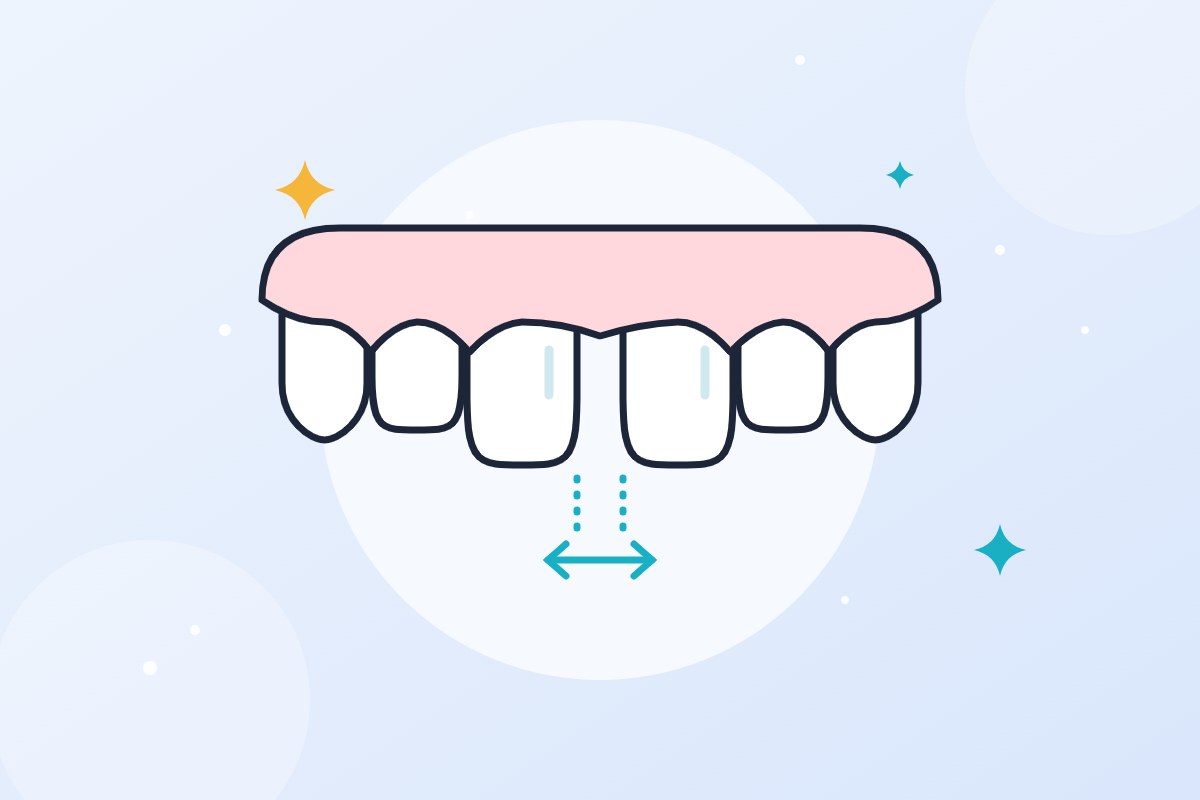
Diastema is a gap between teeth, most often between the upper central incisors. In children it can be a normal stage of development and often closes once the permanent canines erupt. In adults it can be closed with composite bonding or composite veneers (usually in one visit), porcelain veneers or orthodontic treatment. The dentist chooses the method after finding the cause.
Below we explain what causes diastema, when it is worth treating, which methods can close the gap and how they differ, and we answer the questions patients ask most often.
- Diastema is a gap between teeth, usually between the upper front teeth (midline diastema).
- In children aged about 6–12 the gap is often physiological and may close on its own.
- Common causes: genetics, small lateral teeth, missing teeth, an enlarged lip frenulum, habits and gum disease.
- Treatment options: bonding / composite veneers, porcelain veneers, braces or clear aligners.
- First step: a consultation to find the cause (see our price list).
Contents
What is diastema?
Diastema is a space between neighbouring teeth. It most often appears between the upper central incisors – this is called a midline diastema. The gap can range from a fraction of a millimetre to several millimetres and can affect both baby and permanent teeth.
Diastema itself is not a disease. For many people it is simply a feature of their smile they do not want to change. It is still worth checking the cause, because sometimes the gap is a sign of another problem, such as a missing tooth bud, a bite problem or gum disease that makes teeth drift apart.
What causes diastema?
Diastema usually has several overlapping causes. Most often it comes down to genetics and the proportion between tooth size and the size of the jaw. The upper lip frenulum, missing teeth, habits and the condition of the gums and bone also play a role.
- Genetics – diastema often runs in families.
- Tooth and jaw size mismatch – e.g. small, peg-shaped lateral incisors or a wide dental arch.
- Missing teeth – a congenitally missing tooth (most often a lateral incisor) or tooth loss lets neighbouring teeth drift.
- Upper lip frenulum – a thick or low-attached frenulum can keep the front teeth apart.
- Extra tooth – an unerupted supernumerary tooth between the incisors (mesiodens) can push them apart; it shows up on an X-ray.
- Habits – thumb sucking, pushing the tongue between the teeth when swallowing, biting objects.
- Gum disease – bone loss around the teeth can make the front teeth spread and flare.
That is why, before choosing a method, the dentist usually takes an X-ray and checks the bite, gums and frenulum.
Diastema in children – does it need treatment?
In children a gap between the front teeth is often a normal stage. Spaces between baby teeth make room for the larger permanent teeth, and at about 7–11 years the upper permanent incisors are usually slightly fanned out. The gap often narrows or closes after the permanent canines erupt, at around 11–13 years of age.
This does not mean you should wait without check-ups. See a dentist or orthodontist if the gap is wide (usually over 2 mm), does not narrow after the canines erupt, or comes with an enlarged frenulum, a missing tooth or a bite problem. Read more on our orthodontics page.
How to close diastema – treatment options
The choice depends on the width of the gap, its cause, the shape and position of the teeth and the patient’s expectations. For a small gap and a normal bite, bonding or composite veneers are usually enough. When the gap is large or there is a bite problem, treatment usually starts with orthodontics.
| Method | When it works | Tooth preparation | Time |
|---|---|---|---|
| Bonding / composite veneers | small gap, healthy teeth, normal bite | usually none or minimal | often 1 visit |
| Porcelain veneers | gap combined with a shape or colour defect | usually 0.3–0.5 mm of enamel | 2–3 visits |
| Fixed braces or aligners | wider gap, several gaps, bite problem | none | several to many months |
Approximate values. The treatment plan is set by the dentist after an examination.
Bonding and composite veneers
The dentist adds composite material in layers to the sides of the front teeth, widening them so the gap disappears. It usually requires no drilling of healthy teeth and can be done in one visit. Composite may stain over time and need polishing or touch-ups. See composite veneers.
Porcelain veneers
A good option when, besides the gap, you want to change the shape or colour of several teeth. Ceramic is more durable and colour-stable than composite, but it requires removing a thin layer of enamel and laboratory work. See porcelain veneers.
Orthodontic treatment
Orthodontics moves the teeth, so it closes the gap without adding material. It is a good solution for a wide diastema, several gaps or a bite problem. Options include fixed braces or clear aligners. A retainer is needed afterwards, because diastema tends to reopen.
Composite veneers
A quick option for a small gap, usually without drilling.
Often in one visit
Price: quoted after consultation
Invisible orthodontics
Clear aligners for a wider gap or several gaps.
Treatment time set by the orthodontist
Price: quoted after consultation
When is a frenulum procedure needed?
A procedure on the upper lip frenulum is considered when it is enlarged or attached low and is what keeps the front teeth apart. It is most often done together with orthodontic treatment – cutting the frenulum alone usually does not close the gap.
A typical sign is the gum between the front teeth turning pale when the upper lip is pulled up. The dentist decides whether and when to perform the procedure after an examination, usually together with an orthodontist.
What to avoid – DIY gap closing
Do not try to close the gap yourself, for example with orthodontic rubber bands placed around the teeth (“gap bands”). A band can slip under the gum and damage the tissues around the teeth, which in extreme cases leads to tooth loss. Moving teeth should always be supervised by a dentist.
Summary
Diastema is a common and usually harmless feature of the teeth. In children it can be a stage of development; in adults it can be closed effectively with bonding, veneers or orthodontics. The key is finding the cause, because it determines which method gives a lasting result.
Frequently asked questions
Will diastema close on its own?
In children it often does: the gap between the permanent front teeth usually narrows or closes once the permanent canines erupt, at around 11–13 years. In adults diastema does not close by itself, and with gum disease it can even widen.
Does closing a gap with composite hurt?
Usually not. Composite bonding generally does not require drilling healthy teeth, so it is often done without anaesthesia. It usually takes one visit.
How long does composite gap closure last?
It depends on hygiene, bite and habits. Composite may stain or chip over time, so regular check-ups and polishing are worthwhile. Ceramic is more colour-stable and more resistant to staining.
Can diastema come back after orthodontic treatment?
Yes, diastema tends to reopen. That is why a retainer is used after braces or aligners – a fixed wire on the inside of the teeth or a removable splint.
Is diastema closure covered by public health insurance in Poland?
Closing a gap with composite or veneers is aesthetic treatment and is not funded by the Polish National Health Fund (NFZ). The cost is set individually after a consultation.
How should I prepare for the consultation?
Think about whether you want to change only the gap or also the shape or colour of your teeth. The dentist will examine your teeth, gums and frenulum, take an X-ray if needed and present the possible methods with their costs.
Sources
- American Association of Orthodontists – patient information on gaps between teeth (accessed 2026).
- American Dental Association, MouthHealthy – “Diastema” and “Dental bonding” (accessed 2026).
- Polish Orthodontic Society – patient materials (accessed 2026).
See our price list for current prices. The final cost is set by the dentist after an examination and consultation.
Book a consultation at Dobry Dentysta in Rydułtowy
We will find the cause of the gap and suggest a method suited to your bite and expectations.
ul. Ofiar Terroru 24, 44-280 Rydułtowy · opening hours and directions
Call: +48 575 317 617Contact form