

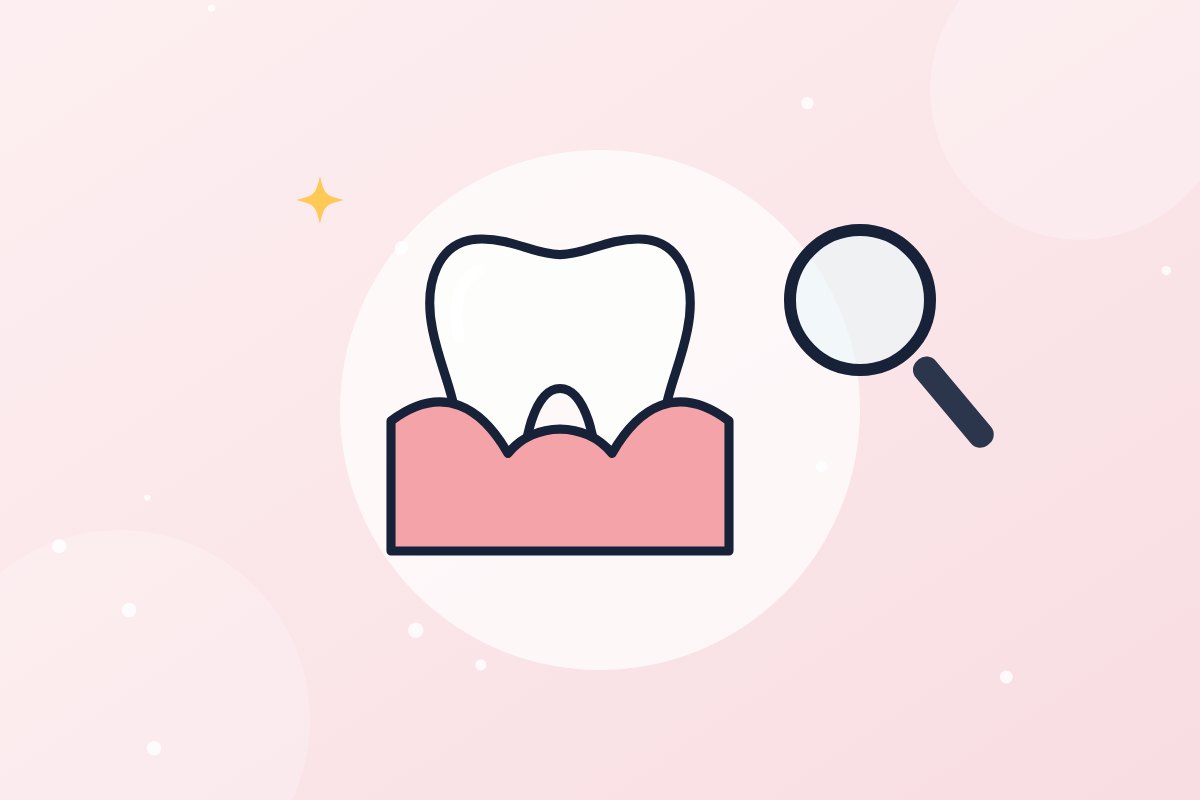
Gum recession is when the gum pulls back and exposes the root of the tooth. The most common causes are gum disease, brushing too hard with a hard toothbrush, thin gums and poorly positioned teeth. Symptoms include ‘longer-looking’ teeth and sensitive tooth necks. Treatment addresses the cause, and with larger recessions the exposed root can be covered with gum plastic surgery.
Teeth that seem to get longer over time and sensitivity to cold drinks are common first signs of gum recession. The problem affects many adults and usually progresses slowly. We explain why gums recede, how to stop it and when a procedure is needed.
- Recession is the gum pulling back and exposing the root of the tooth.
- Most common causes: gum disease, brushing too hard, thin gums, poorly positioned teeth.
- An exposed root is sensitive and more prone to decay.
- Treatment starts with removing the cause; for large recessions — a gum graft.
- Lost bone does not regrow on its own, but the progression of recession can be stopped.
Contents
What is gum recession?
Gum recession is the movement of the gum margin towards the root of the tooth, which exposes the root dentine — the part of the tooth normally covered by gum and bone. Root dentine is not covered by enamel, so it reacts to cold, heat and sweet things and is more prone to decay. Recession can affect a single tooth or many teeth at once.
Why do gums recede?
The most common cause is gum disease, in which inflammation destroys the bone that supports the tooth. Recession is also encouraged by brushing too hard with a hard toothbrush using horizontal strokes, a thin type of gum and bone, teeth tilted outside the bony arch, and lip or tongue piercings. Orthodontic treatment without an assessment of the bone and heavy bite forces can also play a part.
| Cause | Mechanism |
|---|---|
| Gum disease | inflammation and bone loss |
| Brushing too hard | mechanical injury to the gum |
| Thin gums and bone | greater anatomical susceptibility |
| Teeth tilted out of the arch | thin layer of bone over the root |
| Lip or tongue piercing | chronic irritation of the gum |
We write about gum disease in the article periodontitis – symptoms and treatment.
What are the symptoms of gum recession?
The most visible symptom is teeth ‘getting longer’ as the necks and roots become exposed. The exposed areas are often sensitive to cold, heat and sweet things. You can also see the boundary between the lighter enamel and the darker dentine. When inflammation is present, the gums bleed when brushing. In advanced cases, with significant bone loss, teeth may become loose.
How is gum recession treated?
Treatment depends on the cause and how advanced the recession is. With gum disease, treating it is the basis — cleaning below the gumline and check-ups. When the cause is brushing too hard, you switch to a soft toothbrush and change your technique. Sensitivity is eased with fluoride treatment and desensitising products. With larger recessions the exposed root can be covered surgically, e.g. with a connective tissue graft.
| Situation | Possible treatment |
|---|---|
| Gum disease | cleaning below the gumline, check-ups |
| Brushing too hard | soft toothbrush, brushing instruction |
| Sensitivity | fluoride treatment, desensitising products |
| Large recession, appearance | gum plastic surgery (graft) |
| Cavity at the gumline | filling |
Is gum recession reversible?
Lost bone does not regrow on its own, and the gum does not go back to its place by itself. However, in many cases the exposed root can be covered with gum plastic surgery, e.g. a connective tissue graft or the tunnel technique. The result depends on the type of recession and the amount of bone between the teeth. The most important thing is to stop the recession progressing as early as possible.
What to avoid with receding gums
Do not scrub your teeth with a hard toothbrush using horizontal strokes and heavy pressure. Do not ignore bleeding gums or put off a scale and polish. Do not use highly abrasive toothpastes, and do not expect mouthwashes to ‘rebuild’ your gums. Consider removing a lip or tongue piercing if it irritates the gum. Before orthodontic treatment, ask for an assessment of the thickness of your gums and bone.
- A soft toothbrush, ideally an electric one with a pressure sensor.
- Sweeping strokes away from the gum, without scrubbing.
- Regular check-ups and hygiene visits.
How much does gum recession treatment cost in Rydułtowy?
The cost of gum plastic surgery depends on the number of teeth and the technique, so it is set individually after a consultation.
| Service | Price |
|---|---|
| Dental examination | |
| Scale and polish | |
| Fluoride treatment | |
| Surgical consultation | |
| Gum plastic surgery | individual quote |
Summary
Gum recession is the gum pulling back, exposing the root of the tooth and causing sensitivity. It most often results from gum disease or brushing too hard, and thin gums make it more likely. Treatment starts with removing the cause, and with larger recessions the exposed root can be covered surgically. The earlier, the better the outlook.
Frequently asked questions
Can brushing cause receding gums?
Yes. A hard toothbrush, heavy pressure and horizontal scrubbing strokes are common causes of recession, especially with thin gums. It is worth switching to a soft toothbrush, ideally an electric one with a pressure sensor, and brushing with sweeping strokes away from the gum. A dentist or hygienist can show you the correct technique.
How much does a gum graft cost?
The cost depends on the number of teeth involved, the type of recession and the technique used, e.g. a connective tissue graft or the tunnel technique. That is why the price is set individually after a surgical consultation and an assessment of the conditions.
Can orthodontic treatment cause recession?
It can, if teeth are moved outside the bone, especially in people with thin gums and bone. That is why the condition of the gums is assessed before orthodontic treatment, and if necessary the thickness of the bone on a CBCT scan. Properly planned treatment can also improve the position of teeth tilted out of the arch.
Will a sensitivity toothpaste cure recession?
No. Sensitivity toothpastes reduce the reaction of exposed dentine to stimuli, but they do not rebuild the gum or remove the cause of recession. They can help with the symptoms, but with receding gums it is worth seeing a dentist, who will assess the cause and suggest treatment.
Can gum recession lead to tooth loss?
Minor recession on its own does not usually put a tooth at risk. However, if it results from progressing gum disease, bone loss can eventually lead to loose teeth. An exposed root is also more prone to decay. That is why it is important to identify the cause and have regular check-ups.
Can gums grow back on their own?
No. A gum that has receded does not return to its place by itself, and lost bone does not regrow without treatment. You can, however, stop the recession progressing by removing its cause, and in selected cases cover the exposed root surgically. Acting early gives the best results.
Sources
- Cortellini P., Bissada N.F., Mucogingival conditions in the natural dentition: consensus report, J Periodontol, 2018.
- Chambrone L. et al., Root coverage procedures for treating localised and multiple recession-type defects, Cochrane Database Syst Rev, 2018.
- Current Dobry Dentysta clinic price list.
Current prices are listed in our price list. The final cost of treatment is set by the dentist after an examination and consultation.

Agnieszka Świącik, dentist
Dentist at the Dobry Dentysta practice in Rydułtowy. Medical review of this article.
Book an appointment at Dobry Dentysta in Rydułtowy
Book by phone or via the contact form. In an emergency (severe pain, injury), call us – we will tell you when we can see you.
ul. Ofiar Terroru 24, 44-280 Rydułtowy, Poland · opening hours and directions
Call: +48 575 317 617Contact form