

Baby teeth make chewing and clear speech possible, stimulate jaw development and keep space for the permanent teeth. The first ones usually come through at around 6–8 months, and a child has a full set of 20 teeth by about 2.5–3 years. Teeth should be brushed from the first tooth with a rice-grain-sized smear of 1000 ppm fluoride toothpaste, and decay in baby teeth needs to be treated.
‘They're only baby teeth, they'll fall out anyway’ — one of the most common, and most harmful, beliefs in children's dentistry. Baby teeth serve a child for many years and affect the development of the permanent teeth. We explain why it is worth looking after them and how to do it.
- Baby teeth are used for chewing and speech and keep space for the permanent teeth.
- The first baby teeth usually appear at 6–8 months of age.
- A bottle of milk or juice at night is the main cause of early childhood tooth decay.
- Brush teeth from the first tooth with an age-appropriate amount of fluoride toothpaste.
- Decay in baby teeth needs to be treated — do not wait for the tooth to fall out.
Contents
- What do baby teeth do?
- When do baby teeth and permanent teeth come through?
- What is early childhood tooth decay?
- How should you look after baby teeth?
- Does decay in baby teeth need to be treated?
- What mistakes do parents make most often?
- How much does treatment of baby teeth cost in Rydułtowy?
- Summary
- Frequently asked questions
What do baby teeth do?
Baby teeth make proper chewing possible, which supports jaw development and digestion. The baby front teeth play a part in pronouncing sounds such as s, z, ts or sh. Baby teeth also keep space for the permanent teeth — after early loss, the neighbouring teeth drift into the gap. Damaged teeth can affect a child's wellbeing and their relationships with other children.
| Function | Effect of early loss |
|---|---|
| Chewing | food broken down less well |
| Speech | possible difficulty with some sounds |
| Jaw development | weaker stimulation of bone growth |
| Keeping space | teeth drift, not enough space for permanent teeth |
| Wellbeing | embarrassment about how the teeth look |
When do baby teeth and permanent teeth come through?
The lower baby front teeth usually appear first, at around 6–8 months of age. They are followed by the upper front teeth, the first molars, the canines and the second molars — a child most often has the full set of 20 baby teeth by 2.5–3 years. At around the age of 6 the first permanent teeth appear: the first molars and incisors. The changeover of teeth usually continues until about the age of 12.
| Teeth | Approximate age of eruption |
|---|---|
| Lower baby incisors | 6–8 months |
| Upper baby incisors | 8–12 months |
| First baby molars | 12–18 months |
| Baby canines | 16–20 months |
| Second baby molars | 24–30 months |
| First permanent teeth (first molars, incisors) | approx. 6–7 years |
These timings are approximate — they can vary by several months from child to child.
What is early childhood tooth decay?
Early childhood caries (ECC) is rapidly progressing tooth decay in children under 6 and one of the most common chronic diseases at this age. The main causes are night-time bottle feeding with formula or juice, not cleaning the teeth after feeding, and bacteria passed on from a carer's saliva. The first sign is white or brown spots on the upper front teeth.
More about first visits in the article a child's first visit to the dentist.
How should you look after baby teeth?
Brush teeth from when the first tooth appears, twice a day, with a soft children's toothbrush and 1000 ppm fluoride toothpaste — a smear the size of a grain of rice up to the age of 3, then a pea-sized amount. Children usually need a parent's help or supervision with brushing until the age of 7–8. Only give water in a bottle at night, and do not lick your child's dummy or spoon.
- Brushing twice a day, especially thoroughly before bed.
- An age-appropriate amount of fluoride toothpaste.
- Water instead of juice and sugary drinks.
- First visit to the dentist by the first birthday or six months after the first tooth.
- Fluoride treatment and fissure sealing as recommended by your dentist.
Does decay in baby teeth need to be treated?
Yes. Untreated decay in baby teeth progresses quickly and can cause pain, abscesses and inflammation, and the infection can affect the developing permanent tooth underneath. Losing a baby tooth too early risks a lack of space for the permanent tooth and later orthodontic treatment. The dentist chooses the method of treatment according to the child's age and the depth of the cavity.
What mistakes do parents make most often?
The most common mistakes are putting a child to sleep with a bottle of milk or juice, only starting to brush once there are more teeth, using toothpaste without fluoride, leaving a young child to brush on their own, frequent sweet snacks and juices between meals, and putting off the first visit until there is pain. Using the dentist as a threat is also a mistake.
How much does treatment of baby teeth cost in Rydułtowy?
The dentist decides the scope of treatment after the examination.
Current prices are listed in our price list. The final cost of treatment is set by the dentist after an examination and consultation.
Preventive dentistry
Fissure sealing, fluoride varnish and check-ups for children.
Summary
Baby teeth are important for chewing, speech, jaw development and keeping space for the permanent teeth. Looking after them starts from the first tooth: the right amount of fluoride toothpaste, brushing by a parent, water instead of juice in the bottle and a first visit by the first birthday. Decay in baby teeth needs treating, because its effects can also reach the permanent teeth.
Frequently asked questions
Should decayed baby teeth be treated, or should you wait for them to fall out?
Treated. Untreated decay in baby teeth hurts and can lead to an abscess and inflammation, which sometimes affects the developing permanent tooth. Losing a baby tooth too early increases the risk of a lack of space for the permanent tooth. A child keeps many baby teeth for years — up to about the age of 12.
When does a baby tooth need to be extracted?
A baby tooth is extracted when it is so damaged that it cannot be restored, when it is the source of an abscess or inflammation, when it is loose and causing problems before it would naturally fall out, or when the orthodontic plan requires it. The dentist decides after an examination, often based on an X-ray.
Is fissure sealing of baby teeth worthwhile?
Fissure sealing most often concerns the permanent teeth — the first and second molars — straight after they come through. For children at high risk of decay, the dentist may also recommend sealing the grooves of the baby molars. The procedure is painless and does not require drilling. The effectiveness of sealing in preventing fissure decay is well documented.
When can a child brush their own teeth?
Children can try brushing their own teeth from an early age, but a parent should go over the teeth afterwards or supervise brushing, usually until the age of 7–8. Younger children do not yet have the manual dexterity to clean all the tooth surfaces thoroughly, especially the molars.
Does teething cause a fever?
Teething can cause irritability, drooling, a need to chew and a slight rise in temperature. A high fever, diarrhoea or a rash are usually not caused by teething and need a consultation with a paediatrician. Cool teething rings can bring relief; only use medicines after consulting a doctor.
What should you do if your child knocks out a baby tooth?
Contact a dentist to check whether the developing permanent tooth or the surrounding tissues have been injured. Unlike a permanent tooth, a knocked-out baby tooth is not put back in the socket. Until the appointment you can apply a cold compress and stop the bleeding by pressing with sterile gauze.
Sources
- Polish Society of Paediatric Dentistry (Polskie Towarzystwo Stomatologii Dziecięcej) — recommendations on fluoride prevention in children and adolescents.
- American Academy of Pediatric Dentistry — Policy on Early Childhood Caries (accessed 2026).
- Current Dobry Dentysta clinic price list.
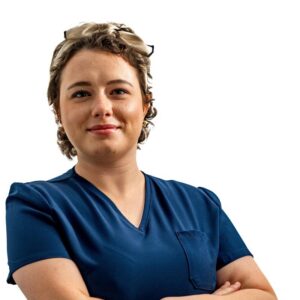
Agnieszka Świącik, dentist
Dentist at the Dobry Dentysta practice in Rydułtowy. Medical review of this article.
Book an appointment at Dobry Dentysta in Rydułtowy
Book by phone or via the contact form. In an emergency (severe pain, injury), call us – we will tell you when we can see you.
ul. Ofiar Terroru 24, 44-280 Rydułtowy, Poland · opening hours and directions
Call: +48 575 317 617Contact form