

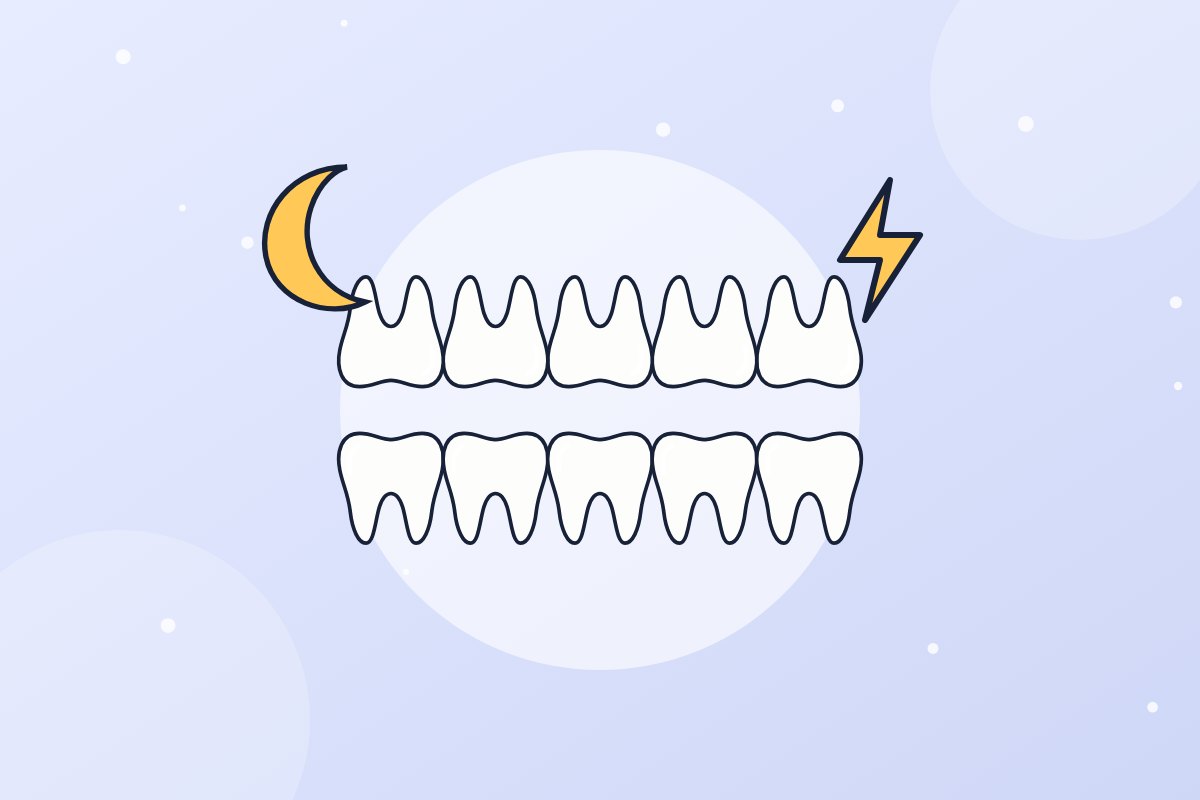
Bruxism is habitual clenching or grinding of the teeth outside of chewing, most often during sleep. It is estimated to affect over ten per cent of adults and usually gives itself away through worn teeth, morning pain in the jaw muscles or temples, and grinding heard by a partner. The mainstay of treatment is an occlusal splint worn at night, combined with stress reduction and, if needed, physiotherapy.
Below we describe the causes and symptoms of bruxism, the damage it does when left untreated, treatment methods, and situations where you should also seek help outside the dental surgery.
- Bruxism is clenching or grinding of the teeth, most often at night and without being aware of it.
- Typical symptoms: worn tooth edges, morning pain in the jaw muscles and temples, sensitive teeth, cracking fillings.
- Most common factors: stress, sleep disorders (including sleep apnoea), bite problems, caffeine, alcohol, nicotine, certain medicines.
- Treatment: a night-time occlusal splint + addressing the cause; the splint protects the teeth but does not remove the habit.
- Diagnosis starts with a dental examination (see our price list); the splint is priced individually.
Contents
What is bruxism?
Bruxism is a parafunction — habitual clenching or grinding of the teeth outside of normal biting and chewing. It most often occurs at night (sleep bruxism), but it can also happen during the day, e.g. when concentrating or under stress. The patient is usually unaware of it — often a partner or the dentist at a check-up notices it first.
Daytime bruxism more often takes the form of clenching without grinding, while night-time bruxism involves rhythmic grinding, which can be loud. Both forms overload the teeth, jaw muscles and jaw joints, although the effects build up slowly and may not hurt for a long time.
What causes bruxism?
Bruxism rarely has a single cause. The best-documented factor is stress and emotional tension. Sleep disorders, including sleep apnoea, bite problems, stimulants (caffeine, alcohol, nicotine), certain medicines — especially SSRI antidepressants — and family predisposition also play a part.
The link with sleep apnoea is clear enough that a dentist who notices typical tooth wear and hears about snoring or morning tiredness may suggest a sleep assessment with a GP or ENT specialist. We describe bite problems and abnormal tooth contacts in more detail in the article occlusion and bite — what they are.
What are the symptoms of bruxism?
The most common symptoms are worn, flattened or shortened tooth edges, morning pain or fatigue in the jaw, neck and temple muscles, tension headaches, and teeth sensitive to cold despite no decay. Cracks in the enamel, fillings falling out, and clicking or pain in the jaw joint are also common.
- Grinding at night, noticed by a partner.
- A tired jaw on waking, difficulty opening the mouth wide.
- Headache around the temples, more often in the morning.
- Cavities at the gumline and sensitive teeth.
- A white line on the inside of the cheek along the bite line (a sign of cheek biting).
- Enlarged, hard masseter muscles.
The dentist makes the diagnosis based on an examination of the teeth, muscles and joints and on your history.
What damage does untreated bruxism do?
Untreated bruxism causes progressive tooth wear, cracks in the enamel and roots, and the loss of fillings, crowns and veneers, which are not designed for such heavy forces. Chronic overloading can lead to jaw joint dysfunction with pain and limited mouth opening, as well as chronic headaches and neck pain.
Bruxism also threatens prosthetic work and implants — excessive forces shorten their lifespan. That is why, before planning veneers or crowns , the dentist asks about grinding and often recommends a protective night splint.
How is bruxism treated?
Treatment combines protecting the teeth with reducing the causes. The first-line method is an occlusal (relaxation) splint worn at night, which protects the teeth from wear and relaxes the jaw muscles. It is complemented by jaw joint physiotherapy, stress reduction techniques and cutting down on stimulants. In resistant cases, botulinum toxin injections are considered.
- Examination and diagnosis — assessment of the teeth, muscles, joints and bite.
- Occlusal splint — custom-made from a scan; see how an occlusal splint works.
- Physiotherapy — exercises, massage and manual therapy for joint and muscle pain.
- Managing stress — relaxation techniques and, if needed, psychotherapy.
- Bite correction — when the habit is triggered by specific abnormal tooth contacts.
Bruxism and occlusal splint
For people with tooth wear, muscle or joint pain and cracking fillings.
Custom-made splint
Price: quote after consultation
When should you also see another specialist about bruxism?
It is worth seeing a doctor in another specialty when grinding is accompanied by loud snoring, pauses in breathing at night or severe daytime sleepiness — these may indicate sleep apnoea. With severe stress, anxiety or insomnia a psychologist can help, and with joint pain and limited mouth opening — a physiotherapist.
If bruxism appeared after starting a new medicine, it is worth discussing this with the prescribing doctor — but do not stop taking any medicine on your own.
Summary
Bruxism is habitual clenching or grinding of the teeth, most often at night, which slowly damages teeth, fillings and prosthetic work and overloads the joints. The mainstay of treatment is a night-time occlusal splint combined with stress reduction and, if needed, physiotherapy.
Frequently asked questions
Can bruxism go away on its own?
In children, bruxism often resolves on its own as the baby teeth are replaced by permanent ones. In adults it does not usually go away without action, especially when linked to stress, sleep disorders or a bite problem. An early protective splint prevents permanent damage to the teeth until the habit can be reduced.
Does a splint cure bruxism for good?
No. An occlusal splint protects the teeth from wear and cracking and relaxes the muscles, but it does not remove the clenching or grinding habit itself. It is a form of protection, not treatment of the cause. Lasting results come from combining the splint with addressing the trigger, such as stress or sleep apnoea.
Is botulinum toxin for bruxism safe?
When properly administered by an experienced doctor, botulinum toxin injections into the masseter muscles are a recognised method for resistant cases. The effect usually lasts several months and needs repeating. It is used rather as a complement when a splint and stress reduction are not enough.
How long do you wear a splint for bruxism?
An occlusal splint is usually worn every night for many months, and with chronic bruxism — long term, as permanent protection for the teeth. The dentist checks its fit at appointments and adjusts the surface if necessary. A splint wears out over time and may need replacing.
Does bruxism cause headaches?
Yes, bruxism is often associated with tension headaches, especially around the temples and in the morning on waking. They result from hours of jaw muscle tension during the night. If headaches are frequent, it is also worth discussing them with your GP to rule out other causes.
Do children grind their teeth too?
Yes, teeth grinding is common in children, especially while their teeth are changing, and in most cases it goes away on its own. It is still worth showing it to a dentist if the child complains of tooth or jaw pain, the teeth are clearly worn, or the grinding is accompanied by snoring and restless sleep.
Sources
- Lobbezoo F. et al., International consensus on the assessment of bruxism, J Oral Rehabil, 2018.
- American Academy of Sleep Medicine — Sleep-related bruxism (accessed 2026).
- Polish Dental Association (Polskie Towarzystwo Stomatologiczne) — patient materials on functional disorders of the masticatory system.
Current prices are listed in our price list. The final cost of treatment is set by the dentist after an examination and consultation.

Agnieszka Świącik, dentist
Dentist at the Dobry Dentysta practice in Rydułtowy. Medical review of this article.
Book an appointment at Dobry Dentysta in Rydułtowy
Book by phone or via the contact form. In an emergency (severe pain, injury), call us – we will tell you when we can see you.
ul. Ofiar Terroru 24, 44-280 Rydułtowy, Poland · opening hours and directions
Call: +48 575 317 617Contact form