

After the age of 60, gum recession, root decay, dry mouth and gum disease become more common. A dental check-up every 6 months — or every 3–4 months with dentures, gum disease or dry mouth — makes it possible to detect changes early. There is no upper age limit for implants; bone and general health are what matter.
With age, it is not only the teeth that change, but also the gums, saliva and the lining of the mouth. Many people assume that ‘at this age treatment is pointless’ — that is not true. We explain which problems are most common in older people, how to prevent them, and what to watch out for with medicines and dentures.
- Gum recession, root decay and dry mouth become more common with age.
- Dry mouth is often a side effect of medication — it is worth telling your doctor.
- There is no upper age limit for implants.
- Before any procedure, tell your dentist about anticoagulants and osteoporosis medication.
- Take dentures out at night, clean them every day and have their fit checked.
Contents
- How do teeth and gums change with age?
- Which dental problems are most common in older people?
- Is there an age limit for implants?
- How can you cope with a dry mouth?
- Which medicines should you tell your dentist about before a procedure?
- How should you look after dentures?
- What mistakes do older people make in looking after their teeth?
- How much does a dental visit for an older person cost in Rydułtowy?
- Summary
- Frequently asked questions
How do teeth and gums change with age?
With age, enamel wears down and becomes more prone to cracking, dentine hardens and the pulp chamber shrinks. The gums tend to recede, exposing the necks and roots of the teeth. Saliva production also often decreases, mainly because of medication. These changes do not mean tooth loss is inevitable, but they call for different prevention than in younger people.
Which dental problems are most common in older people?
Root decay is common in older people — it develops on exposed dentine, which is less resistant than enamel. Dry mouth, advanced gum disease, bone loss after losing teeth and oral thrush, especially in denture wearers, are also common. Checking the lining of the mouth is important, because some changes need prompt diagnosis.
| Problem | Cause | Prevention |
|---|---|---|
| Root decay | gum recession, exposed dentine | fluoride toothpaste, fluoride treatment, check-ups |
| Dry mouth | medicines, general illnesses | water, saliva substitutes, review of medication |
| Gum disease | plaque, years of neglect | scale and polish, periodontal treatment |
| Bone loss | missing teeth | replacing missing teeth, implants |
| Oral thrush | dentures, lowered immunity | denture hygiene, taking them out at night |
We write about gum disease in the article periodontitis – symptoms and treatment.
Is there an age limit for implants?
There is no upper age limit for implants. Suitability depends on the amount and quality of bone assessed on a CBCT scan, general health — including diabetes control and osteoporosis medication — and the ability to keep the area clean. Biological age matters more than age on paper. For people with no teeth, a denture secured on 2–4 implants is often a good solution.
See dental implants and the article denture on implants (overdenture).
How can you cope with a dry mouth?
Dry mouth is a common side effect of medicines, including heart medication, diuretics, antidepressants and antihistamines. It helps to sip water throughout the day, use saliva substitutes in gel or spray form and chew sugar-free gum. It is worth avoiding alcohol and smoking. The dentist may recommend a higher-fluoride toothpaste, and the doctor treating you may consider changing the medicine.
- Drink water regularly, in small amounts.
- Use saliva substitutes available from the pharmacy.
- Tell the doctor treating you about your dry mouth.
- Ask your dentist about fluoride treatment and a higher-fluoride toothpaste.
Which medicines should you tell your dentist about before a procedure?
Before any procedure, especially an extraction or implant placement, tell your dentist about all the medicines you take. Particularly important are anticoagulants, e.g. warfarin and the newer oral anticoagulants, and osteoporosis medicines such as bisphosphonates and denosumab, which increase the risk of osteonecrosis of the jaw after surgery. Do not stop any medicine on your own — the doctor treating you makes that decision.
How should you look after dentures?
Take dentures out at night to give the lining of your mouth a rest. Clean them every day with a denture brush and a product designed for cleaning them, not ordinary toothpaste, which scratches acrylic. Gently clean your gums and tongue with a soft toothbrush. A loose denture needs checking — it may need relining or replacing. Pressure points and sores under a denture should be reported to the dentist.
More about dentures on our page removable dentures.
What mistakes do older people make in looking after their teeth?
The most common mistakes are giving up check-ups when nothing hurts, believing treatment is pointless in older age, wearing loose dentures for years without having them checked, and sleeping in dentures. It is also risky not to tell the dentist about your medicines and to dismiss changes in the lining of the mouth, ulcers and white or red patches that do not heal within 2 weeks.
How much does a dental visit for an older person cost in Rydułtowy?
Dentures, denture repairs and implant treatment are priced individually after a consultation, once the dentist has assessed the condition of the mouth.
| Service | Price |
|---|---|
| Dental examination | |
| Prosthodontic consultation | |
| Scale and polish | |
| Fluoride treatment | |
| Panoramic X-ray | |
| Dentures, denture repairs, implants | individual quote |
Dental implants
Implant-supported restorations with no upper age limit.
individual quote
Summary
After the age of 60 the mouth needs different prevention: monitoring for root decay, dry mouth, gum disease and changes in the lining of the mouth. Regular appointments, fluoride, looking after dentures and telling the dentist about your medicines help you keep your teeth and eat comfortably. Age does not rule out treatment, including implants — what matters is your general health and bone.
Frequently asked questions
Can older people have root canal treatment?
Yes, there is no age limit for root canal treatment. In older patients the canals are often narrower and more calcified, which can make the procedure take longer. Before treatment, the dentist takes into account your general health and medicines, e.g. anticoagulants. Keeping your own tooth is usually better than extracting it and replacing the gap.
How should you look after removable dentures?
Take your denture out at night and store it clean, as advised by your dentist. Clean it every day with a denture brush and a special cleaner, and use cleaning tablets from time to time. Clean your gums with a soft toothbrush. Have your denture checked by a prosthodontist, usually once a year — a loose denture may need relining.
Does osteoporosis medication affect dental treatment?
Yes. Antiresorptive medicines such as bisphosphonates and denosumab can increase the risk of osteonecrosis of the jaw after surgical procedures such as an extraction or implant placement. That is why you need to tell your dentist about these medicines before such a procedure. Do not stop taking them on your own — the doctor treating you makes that decision.
How often should an older person see the dentist?
For most older people a check-up every 6 months is enough. With gum disease, dry mouth, many fillings or dentures, more frequent appointments, e.g. every 3–4 months, make it possible to detect problems sooner. A check-up covers not just the teeth, but also the gums, the lining of the mouth and the fit of dentures.
Can a tooth be extracted if you take anticoagulants?
Usually yes, but it requires proper preparation. The dentist needs to know which medicine you take and at what dose, and sometimes up-to-date clotting test results are needed. Most often the medicines are not stopped, and bleeding is controlled locally. Any change in treatment is decided by the doctor treating you.
Can a dry mouth be cured?
It depends on the cause. If it results from medication, the doctor treating you can sometimes change the product or dose. In other cases symptomatic treatment is used: saliva substitutes, drinking water often, chewing sugar-free gum and humidifying the air. The dentist helps protect your teeth from decay by recommending fluoride and more frequent check-ups.
Sources
- World Health Organization — Global oral health status report, 2022.
- Ruggiero S.L. et al., AAOMS position paper on medication-related osteonecrosis of the jaws, J Oral Maxillofac Surg, 2022.
- Polish Dental Association (Polskie Towarzystwo Stomatologiczne) — information for patients.
- Current Dobry Dentysta clinic price list.
Current prices are listed in our price list. The final cost of treatment is set by the dentist after an examination and consultation.
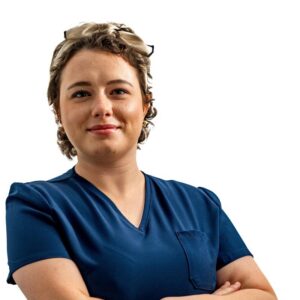
Agnieszka Świącik, dentist
Dentist at the Dobry Dentysta practice in Rydułtowy. Medical review of this article.
Book an appointment at Dobry Dentysta in Rydułtowy
Book by phone or via the contact form. In an emergency (severe pain, injury), call us – we will tell you when we can see you.
ul. Ofiar Terroru 24, 44-280 Rydułtowy, Poland · opening hours and directions
Call: +48 575 317 617Contact form