


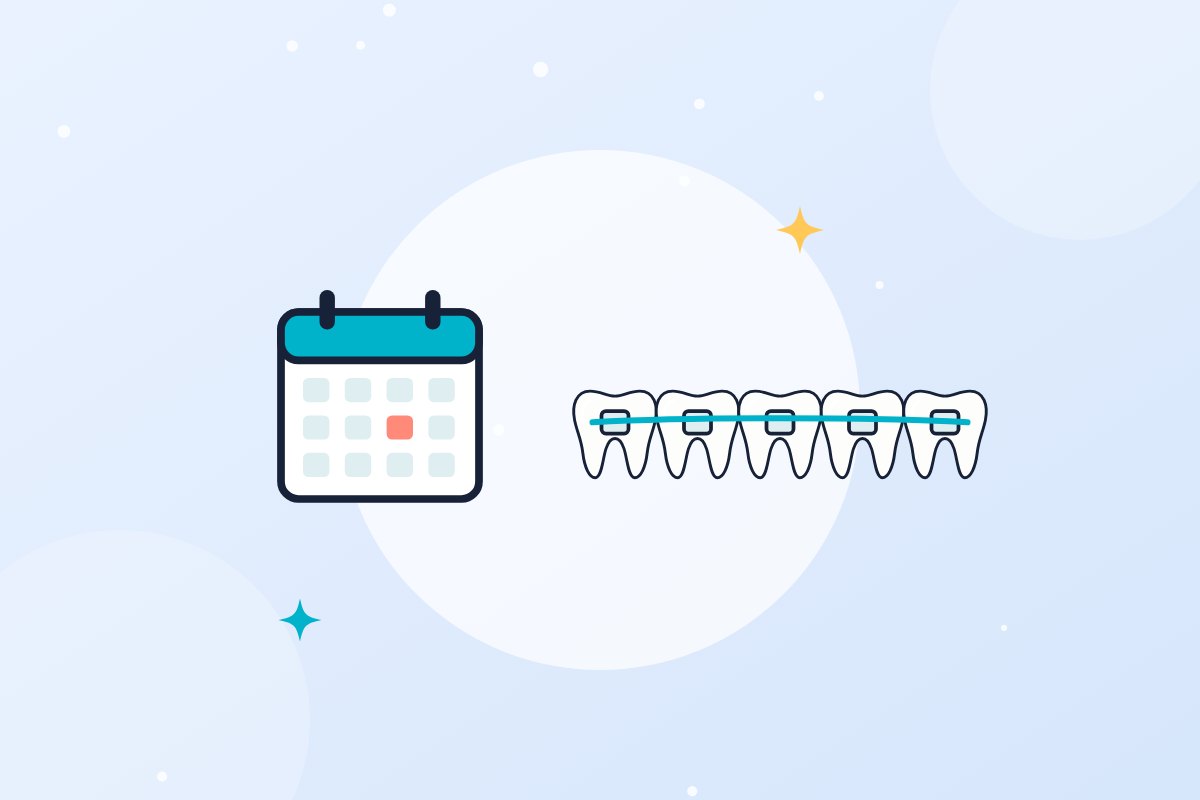
A child's first orthodontic consultation is recommended by around the age of 7 at the latest, when the first permanent teeth come through. It is worth coming earlier if your child breathes through their mouth, has a crossbite or underbite, or still sucks their thumb after the age of 3. Adults can have treatment at any age.
Bite problems are not always visible to the naked eye, and some are easier to correct while a child is still growing. Adults, on the other hand, often do not realise that it is never too late for orthodontic treatment. We suggest which signs should prompt a consultation and what it involves.
- A child's first orthodontic consultation — by around age 7 at the latest.
- Signs in children: mouth breathing, crossbite, underbite, thumb-sucking after age 3.
- In adults: crowding, tooth wear, preparation for prosthetic treatment or implants.
- The first visit is for diagnosis — braces are not fitted at it.
- During growth, bone development can be influenced; in adults, teeth are moved.
Contents
- When should you take your child to an orthodontist for the first time?
- Which signs in a child call for an orthodontic consultation?
- When should an adult see an orthodontist?
- What is the first visit to an orthodontist like?
- Why does age matter in orthodontic treatment?
- What mistakes do parents and patients make?
- How much does an orthodontic consultation cost in Rydułtowy?
- Summary
- Frequently asked questions
When should you take your child to an orthodontist for the first time?
Orthodontic societies recommend a first consultation by around the age of 7 at the latest. At this age the first permanent teeth — the incisors and first molars — are already in the mouth, so the orthodontist can assess the relationship between the upper and lower jaw, detect skeletal problems that need treatment during growth, and anticipate problems with space for the next teeth. Often it ends with monitoring.
An early consultation does not automatically mean braces. For many children, the orthodontist recommends only check-ups and returns to the subject at the right point in their development. More on our page orthodontics.
Which signs in a child call for an orthodontic consultation?
It is worth seeing an orthodontist earlier if your child's mouth is always open and they breathe through it, if the upper back teeth sit behind the lower ones (crossbite), if the lower jaw clearly juts forward or is set back, if baby teeth fall out much earlier or later than in their peers, if there is not enough space for the permanent teeth, or if thumb- or dummy-sucking continues after the age of 3.
| Sign | Why it matters |
|---|---|
| Mouth breathing, mouth always open | can affect jaw development |
| Crossbite | usually does not correct itself |
| Underbite or overbite | may need treatment during growth |
| Thumb- or dummy-sucking after age 3 | can deform the dental arch |
| Very early or late tooth replacement | risk of not enough space for permanent teeth |
| Clear crowding | lack of space in the arch |
When should an adult see an orthodontist?
An adult can see an orthodontist at any age. Good reasons include crowding or gaps that bother you, relapse after earlier treatment, progressive tooth wear due to uneven contact, and planned prosthetic or implant treatment that is easier to carry out once the teeth are properly aligned. Jaw joint problems can also be a reason for a consultation.
We describe treatment methods for adults in the articles adult orthodontics and Invisalign or fixed braces.
What is the first visit to an orthodontist like?
The first visit is diagnostic. The orthodontist takes a history, examines the teeth, bite and facial features, and if necessary orders a panoramic and cephalometric X-ray and a scan. They then explain the diagnosis and possible treatment methods. Braces are not fitted at the first visit — a detailed plan is drawn up after the X-rays and models have been analysed.
| Part of the diagnosis | Why |
|---|---|
| Clinical examination | assessing the teeth, bite and face |
| Panoramic X-ray | developing teeth, roots, bone |
| Cephalometric X-ray | relationship of the upper and lower jawbones |
| Scan | model of the teeth for analysis |
| Photos | records before treatment |
Why does age matter in orthodontic treatment?
In children and teenagers who are still growing, the orthodontist can influence not only the position of the teeth but also the direction of bone growth, e.g. with functional or expansion appliances. Once growth has finished, usually around the age of 17–18, it is mainly possible to move teeth with fixed braces or aligners, and severe skeletal problems may require treatment involving a surgeon.
What mistakes do parents and patients make?
A common mistake is waiting until ‘all the permanent teeth have come through’, which for children with skeletal problems can mean missing the best moment for treatment. Other mistakes include ignoring mouth breathing and thumb-sucking, believing it is ‘not worth it’ for an adult to have their bite treated, and giving up the retainer after treatment ends, which encourages relapse.
How much does an orthodontic consultation cost in Rydułtowy?
Current prices are listed in our price list. The final cost of treatment is set by the dentist after an examination and consultation.
Summary
A child's first orthodontic consultation should take place by around the age of 7 at the latest, and earlier if there are signs such as mouth breathing, crossbite or thumb-sucking. Adults can have treatment at any age, especially before prosthetic treatment. The first visit is for diagnosis, and the treatment plan is drawn up after analysing X-rays and models.
Frequently asked questions
Isn’t age 7 too early to see an orthodontist?
No. At this age the orthodontist usually assesses how the bite is developing and decides whether monitoring is enough. If they detect a skeletal problem, they may plan early treatment, e.g. with an expansion or functional appliance. An early diagnosis can be a chance for simpler treatment in the future, although not every child needs it.
Does orthodontic treatment for adults require extracting teeth?
Not always. The decision about any extraction depends on the type of problem, the amount of space in the arch and the facial profile. With moderate crowding, treatment is often possible without extractions, using other methods of creating space. The orthodontist decides on the treatment plan after analysing X-rays and models.
Can Invisalign be planned without an orthodontist?
No. Aligner treatment requires diagnosis and assessment of suitability by a dentist, who evaluates the bite, the condition of the teeth and gums, and X-rays. The dentist develops and checks the tooth movement plan in specialist software. DIY ‘teeth straightening’ without a dentist's supervision can lead to gum and bite problems.
Do crooked baby teeth need treatment?
Not always. The position of the baby teeth does not in itself determine the position of the permanent teeth. The relationship between the jaws, the amount of space in the arch and habits such as thumb-sucking are more important. The orthodontist assesses whether monitoring is enough or intervention is needed. Gaps between baby teeth are often perfectly normal.
Does mouth breathing affect the bite?
Chronic mouth breathing can affect jaw development and tongue position, which encourages certain bite problems. The cause may be, for example, enlarged tonsils or allergies, so an ENT consultation is sometimes needed as well. It is worth telling the orthodontist if your child sleeps with their mouth open or snores.
How long does the first visit to an orthodontist take?
The first consultation usually takes from around half an hour to an hour, depending on the extent of the examination and whether scans and photographs are taken. The full analysis with X-rays and models is often discussed at the next appointment, when the orthodontist presents the treatment plan and its approximate duration.
Sources
- American Association of Orthodontists — Orthodontic check-up no later than age 7 (accessed 2026).
- Polish Orthodontic Society (Polskie Towarzystwo Ortodontyczne) — information for patients.
- Current Dobry Dentysta clinic price list.
Agnieszka Świącik, dentist
Dentist at the Dobry Dentysta practice in Rydułtowy. Medical review of this article.
Book an appointment at Dobry Dentysta in Rydułtowy
Book by phone or via the contact form. In an emergency (severe pain, injury), call us – we will tell you when we can see you.
ul. Ofiar Terroru 24, 44-280 Rydułtowy, Poland · opening hours and directions
Call: +48 575 317 617Contact form