

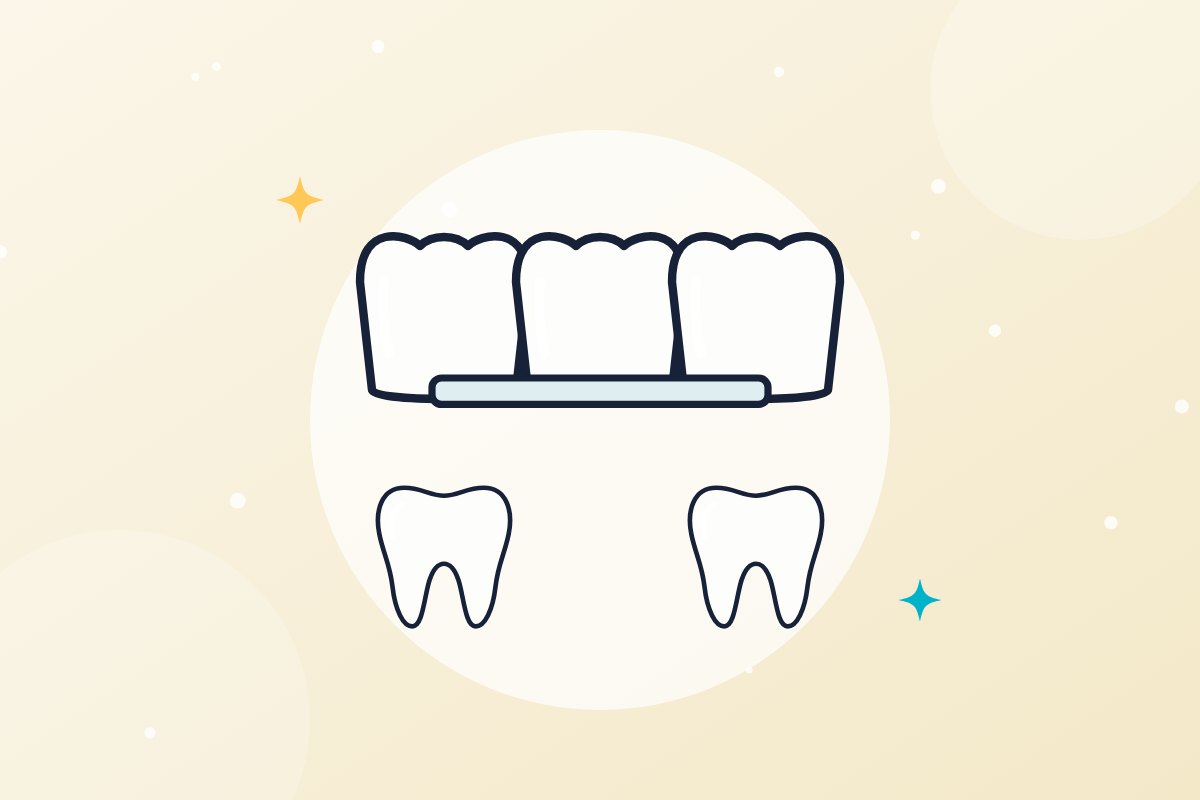
A zirconia bridge has no metal framework, so it does not cast a grey shadow at the gum line, it is biocompatible and lets light through well. A porcelain-fused-to-metal (PFM) bridge has a long clinical track record and is often cheaper, but if the gum recedes a dark margin may become visible. The choice depends on the position in the arch, bite forces, aesthetic expectations and budget.
A dental bridge replaces a missing tooth by resting on the neighbouring teeth or on implants. For years the standard was porcelain fused to metal; today zirconia is chosen more and more often. We compare both materials and explain what the decision depends on.
- PFM: a metal framework covered with porcelain – proven, but less natural at the gum line.
- Zirconia: metal-free, biocompatible, no grey margin at the gum.
- Monolithic zirconia – for back teeth; porcelain-layered zirconia – better aesthetics at the front.
- With bruxism, a protective splint is usually recommended whatever the material.
- The prosthodontist chooses the material after assessing the bite, gums and the patient’s expectations.
Contents
- How does a zirconia bridge differ from a PFM bridge?
- What are the pros and cons of a PFM bridge?
- What are the advantages of a zirconia bridge?
- Monolithic or porcelain-layered zirconia?
- When does a PFM bridge still make sense?
- What does the choice of bridge material depend on?
- What should you avoid when choosing a bridge?
- How much does a dental bridge cost in Rydułtowy?
- Summary
- Frequently asked questions
How does a zirconia bridge differ from a PFM bridge?
A PFM (porcelain fused to metal) bridge has a metal framework, most often made of a cobalt-chromium alloy, covered with porcelain. A zirconia bridge is made of zirconium oxide – either entirely or with a porcelain layer. The main differences concern aesthetics at the gum line, translucency, biocompatibility and price. Both options have their indications, and the choice depends on the specific situation in the mouth.
| Criterion | PFM bridge (porcelain fused to metal) | Zirconia bridge |
|---|---|---|
| Framework | metal | zirconium oxide |
| Aesthetics at the gum line | possible grey margin with gum recession | no metal, no grey shadow |
| Translucency | limited | closer to a natural tooth |
| Biocompatibility | good; rare metal hypersensitivity | very good |
| Clinical history | very long | shorter, but well documented |
| Cost | usually lower | usually higher |
What are the pros and cons of a PFM bridge?
A porcelain-fused-to-metal bridge is strong, has a very long clinical history and usually costs less than zirconia. Its weakness is aesthetics: the metal framework limits translucency, and if the gum recedes a dark crown margin may be exposed. A small number of people are hypersensitive to components of the alloy. The veneering porcelain can also chip under heavy loads.
What are the advantages of a zirconia bridge?
Zirconia contains no metal, so no grey shadow appears at the gum line, even if the gum recedes slightly over time. Zirconium oxide is very well tolerated by the tissues and has high mechanical strength. It lets light through better than a metal framework, so the restoration looks more natural. With good hygiene and check-ups, a zirconia bridge can last many years.
More about the material on the pages zirconia crowns i dental bridges.
Monolithic or porcelain-layered zirconia?
Monolithic zirconia is made entirely of zirconia – it has the highest resistance to fracture and chipping, so it is used mainly for back teeth and in people with strong bite forces. Porcelain-layered zirconia has a zirconia framework covered with porcelain, which gives better aesthetics at the front, at the cost of a higher risk of the veneering layer chipping.
| Variant | Strength | Typical use |
|---|---|---|
| Monolithic zirconia | strength, no chipping of the veneer | back teeth, bruxism |
| Porcelain-layered zirconia | aesthetics, depth of colour | front teeth |
When does a PFM bridge still make sense?
A porcelain-fused-to-metal bridge can be a sensible choice on a limited budget, in less visible areas, and in some clinical situations, e.g. with particular bite conditions where the prosthodontist considers this design more suitable. It is a proven solution with a long track record. It is worth deciding after discussing your aesthetic expectations and the conditions in your mouth.
What does the choice of bridge material depend on?
The prosthodontist takes into account the position of the bridge in the arch (front or back), bite forces and the presence of bruxism, aesthetic expectations, the condition of the gums and abutment teeth, and the number of missing teeth. Cost and expected durability also matter. Remember that a bridge requires the neighbouring teeth to be prepared – an implant, which does not burden healthy teeth, can be an alternative.
You will find a comparison of the options in the article implant or bridge. A bridge can also be supported by implants – see an implant bridge.
What should you avoid when choosing a bridge?
Do not choose a material based only on price or fashion – each has its own indications. It is also a mistake to skip treating the gums and abutment teeth before making the bridge, or to forgo a splint with bruxism, which can damage any restoration. Once the bridge is fitted, the space under the pontic must be cleaned thoroughly – with superfloss or a water flosser.
How much does a dental bridge cost in Rydułtowy?
At Dobry Dentysta in Rydułtowy bridges and crowns – both porcelain-fused-to-metal (PFM) and all-ceramic – are priced individually after a consultation, because the cost depends on the number of units, the material and the preparation of the abutment teeth.
Current prices are listed in our price list. The final cost of treatment is set by the dentist after an examination and consultation.
Dental bridges
Replacing missing teeth using your own teeth for support.
individual quote
Implant bridge
Fixed replacement without preparing healthy teeth.
individual quote
Summary
Zirconia and porcelain-fused-to-metal bridges are both proven ways of replacing missing teeth. Zirconia wins on aesthetics at the gum line and biocompatibility, PFM on its long track record and usually lower price. The choice of material depends on the position in the arch, bite forces, the condition of the gums and the patient’s expectations, so it is best decided after a prosthodontic consultation.
Frequently asked questions
Is a zirconia bridge visible on an X-ray?
Yes. Zirconium oxide shows up clearly on an X-ray, so the dentist can assess the fit of the bridge margins and the condition of the abutment teeth and bone. The density of the material can, however, make it harder to detect decay under the crown, so regular clinical check-ups and thorough hygiene around the bridge margins are important.
How long does it take to make a zirconia bridge?
At least two visits are usually needed: preparing the abutment teeth with a scan, and fitting the bridge. In between, the patient wears a temporary restoration. Laboratory work usually takes from a few days to two weeks. For extensive work an extra try-in may be needed.
Can a zirconia bridge crack?
Zirconia is very strong, but not indestructible. The risk of damage is increased by bruxism, biting hard objects and injuries. In porcelain-layered bridges the veneering layer can chip. For people who grind their teeth, the dentist usually recommends a night-time relaxation splint to protect the restoration.
How many years does a dental bridge last?
How long a bridge lasts depends on the material, the condition of the abutment teeth, hygiene and bite forces. With good hygiene – especially cleaning under the pontic – and regular check-ups, a bridge can last many years. The most common reason for replacement is decay or gum disease affecting the abutment teeth, not wear of the material itself.
Can zirconia cause allergies?
Allergic reactions to zirconium oxide are very rare – it is one of the best-tolerated prosthetic materials. That is why zirconia is often chosen for people with metal hypersensitivity. If you have a documented allergy to metals or other dental materials, tell the dentist before treatment is planned.
How do I clean a dental bridge?
Clean the bridge like your own teeth and, in addition, clean under the pontic every day – with stiff-ended floss (e.g. superfloss), interdental brushes or a water flosser. Plaque left there can lead to decay of the abutment teeth and gum inflammation. Regular hygiene appointments help keep the bridge in good condition.
Sources
- Pjetursson B.E. et al., A systematic review of the survival and complication rates of zirconia-ceramic and metal-ceramic multiple-unit fixed dental prostheses, Clin Oral Implants Res, 2015.
- Sailer I. et al., All-ceramic or metal-ceramic tooth-supported fixed dental prostheses: a systematic review, Dent Mater, 2015.
- Current Dobry Dentysta clinic price list.

Agnieszka Świącik, dentist
Dentist at the Dobry Dentysta practice in Rydułtowy. Medical review of this article.
Book an appointment at Dobry Dentysta in Rydułtowy
Book by phone or via the contact form. In an emergency (severe pain, injury), call us – we will tell you when we can see you.
ul. Ofiar Terroru 24, 44-280 Rydułtowy, Poland · opening hours and directions
Call: +48 575 317 617Contact form