


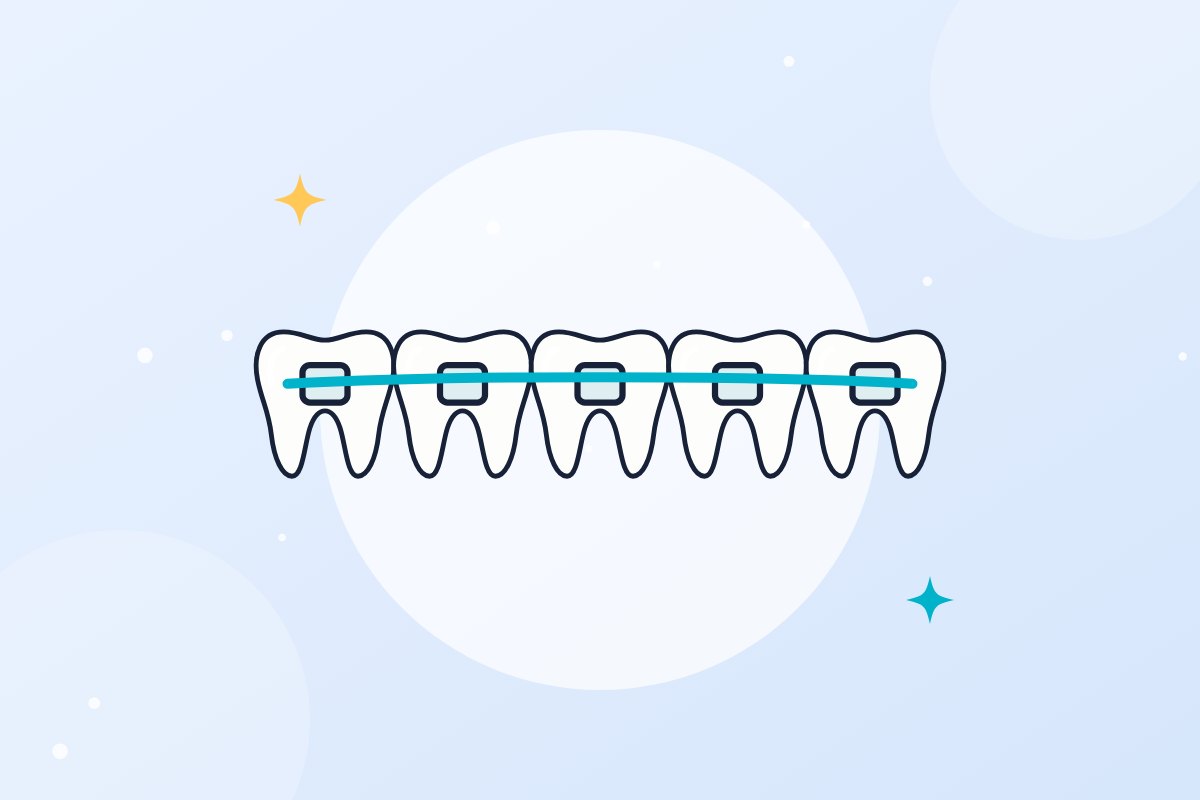
Treatment with fixed braces starts with a consultation and diagnostics: X-rays, scans and photographs. Fitting the brackets usually takes 1–2 hours, and the first 3–5 days involve pressure on the teeth. Check-ups take place every 4–8 weeks, and the whole treatment most often lasts 18–24 months. A retainer is essential once the brace comes off.
Deciding on fixed braces raises many questions: what fitting involves, whether it hurts, what you can eat and how long it will take. We describe the whole process — from the first consultation, through everyday life with braces, to the retention stage, which determines how long the result lasts.
- Treatment starts with diagnostics: X-rays, scans, photographs.
- Fitting braces usually takes 1–2 hours and does not require anaesthetic.
- The first 3–5 days bring pressure and mild discomfort.
- Check-ups every 4–8 weeks; treatment usually 18–24 months.
- After the brace comes off, a retainer — ideally indefinitely.
Contents
- What diagnostics are done before braces are fitted?
- What do the treatment plan and choice of brace involve?
- How are fixed braces fitted?
- What is life with fixed braces like?
- How often are check-ups and how long does treatment take?
- What happens after the brace comes off?
- Which mistakes make treatment with braces take longer?
- How much do orthodontic diagnostics cost in Rydułtowy?
- Summary
- Frequently asked questions
What diagnostics are done before braces are fitted?
The first visit is a consultation, not a fitting. The orthodontist takes a history, assesses the teeth, gums and bite, and then orders tests: a panoramic X-ray, a cephalometric X-ray, a scan, and photographs of the face and teeth. In justified cases a CBCT scan is taken. On this basis the orthodontist analyses the relationship between the bones and teeth and prepares a treatment plan.
| Scan | Why |
|---|---|
| Panoramic X-ray | all the teeth, developing teeth, roots, bone |
| Cephalometric X-ray | facial proportions, relationship of the upper and lower jaw |
| Scan | model of the teeth for analysis and planning |
| Photos | records before treatment |
| CBCT (when indicated) | e.g. impacted teeth, bone assessment |
What do the treatment plan and choice of brace involve?
After the analysis, the orthodontist presents the plan: the expected length of treatment, any need for extractions, cooperation with other specialists and the possible types of brace — metal, aesthetic (ceramic or sapphire), lingual or aligners. The decision is made together with the patient, taking into account clinical indications, age, aesthetic expectations and budget. Teeth and gums must be treated before the brace is fitted.
You will find a comparison of the methods in the article Invisalign or fixed braces. We describe the types of braces on our page orthodontic braces.
How are fixed braces fitted?
Fitting usually takes 1–2 hours and does not require anaesthetic. The teeth are cleaned and the enamel briefly etched with a gel so that the adhesive bonds better. Then adhesive is applied to each tooth, the bracket is positioned precisely and the adhesive is cured with a lamp. Finally an orthodontic archwire is threaded through the brackets and secured with ligatures. It is the wire, changed at subsequent appointments, that gradually moves the teeth.
| Step | What happens |
|---|---|
| 1. Cleaning | removing plaque from the tooth surfaces |
| 2. Etching | preparing the enamel for bonding |
| 3. Bonding the brackets | positioning and curing with a lamp |
| 4. Archwire | inserting the wire and ligatures |
| 5. Instructions | hygiene, diet, what to do if problems arise |
What is life with fixed braces like?
For the first 3–5 days the teeth are tender when biting — painkillers and a soft diet help. During treatment you need to avoid hard and sticky foods and cut fruit and vegetables into pieces. Hygiene takes more time: an orthodontic toothbrush, interdental brushes and floss with a stiffened end. A mouthguard is needed for contact sports. A slight lisp usually disappears after a few weeks.
We describe hygiene in detail in the article how to look after your teeth with fixed braces.
How often are check-ups and how long does treatment take?
Check-ups usually take place every 4–8 weeks and last about 15–30 minutes. The orthodontist changes or adjusts the wire, checks progress and assesses hygiene. The whole treatment with fixed braces most often lasts 18–24 months, and may be shorter for simpler problems. The exact time depends on the problem, the patient's cooperation and attending appointments regularly.
What happens after the brace comes off?
Removing the brace does not end treatment. The teeth need to be held in their new position, because they tend to drift back. This is done with a fixed retainer — a thin wire bonded to the inside of the front teeth — or a removable, clear retainer, usually worn at night. Often both are used. Retention is best treated as indefinite, because relapse can happen even years later.
Which mistakes make treatment with braces take longer?
Treatment is lengthened above all by brackets coming off — most often after hard foods — missed check-ups, neglected hygiene leading to gum inflammation and white spots, and not wearing orthodontic elastics if they have been prescribed. After treatment, the most common mistake is giving up the retainer, which leads to relapse.
How much do orthodontic diagnostics cost in Rydułtowy?
The orthodontist gives the cost of the brace and treatment itself after the analysis, as it depends on the type of brace and the problem.
| Service | Price |
|---|---|
| First orthodontic consultation | |
| Scans | |
| Photos | |
| X-ray package | |
| Consultation with analysis and treatment plan | |
| Fixed braces and treatment | quoted after assessment |
Summary
Treatment with fixed braces is a process in stages: diagnostics, planning, fitting the brackets, regular check-ups and retention. The first few days bring pressure, and everyday life with braces requires changes to your diet and more thorough hygiene. Treatment usually lasts 18–24 months, and wearing a retainer consistently determines how long the result lasts.
Frequently asked questions
How much do fixed braces cost?
The cost depends on the type of brace (metal, aesthetic, lingual), the complexity of the problem and the length of treatment. It is worth adding check-ups and a retainer to the cost of treatment.
Can fixed braces be worn for just a year?
For simpler problems treatment may take about a year or a little longer, but for more complex cases a short treatment time cannot be promised in advance. The orthodontist determines the exact length of treatment after full diagnostics. Shortening treatment at the expense of quality increases the risk of relapse.
Can you give up braces part-way through treatment?
Technically it is possible, but not recommended. Teeth that are in the process of moving may be in a less favourable position than before treatment, and much of the time and money spent so far will be lost. If you are considering stopping treatment, talk to your orthodontist about possible solutions.
Does having braces fitted hurt?
Fitting braces does not hurt and does not require anaesthetic — although you do have to keep your mouth wide open for a while. Discomfort usually appears a few hours later, when the teeth start to react to the forces from the wire. The pressure most often lasts 3–5 days and is eased by painkillers and a soft diet.
What should you eat in the first few days after braces are fitted?
In the first few days, soft foods work best: soups, mashed potato, pasta, scrambled eggs, yoghurt, cooked vegetables and fish. Avoid hard, crunchy and sticky foods. Once the pressure eases, you can return to your normal diet, remembering to cut harder fruit and vegetables into small pieces.
How long do you wear a retainer?
A retainer is best treated as an indefinite commitment. A fixed wire on the inside of the teeth can stay in place for years, provided it is checked regularly. A removable retainer is worn every night at first, and later as advised by the orthodontist. Giving up retention is the most common cause of relapse.
Sources
- American Association of Orthodontists — What to expect with braces (accessed 2026).
- Littlewood S.J. et al., Retention procedures for stabilising tooth position after treatment with orthodontic braces, Cochrane Database Syst Rev, 2016.
- Current Dobry Dentysta clinic price list.
Current prices are listed in our price list. The final cost of treatment is set by the dentist after an examination and consultation.

Agnieszka Świącik, dentist
Dentist at the Dobry Dentysta practice in Rydułtowy. Medical review of this article.
Book an appointment at Dobry Dentysta in Rydułtowy
Book by phone or via the contact form. In an emergency (severe pain, injury), call us – we will tell you when we can see you.
ul. Ofiar Terroru 24, 44-280 Rydułtowy, Poland · opening hours and directions
Call: +48 575 317 617Contact form