

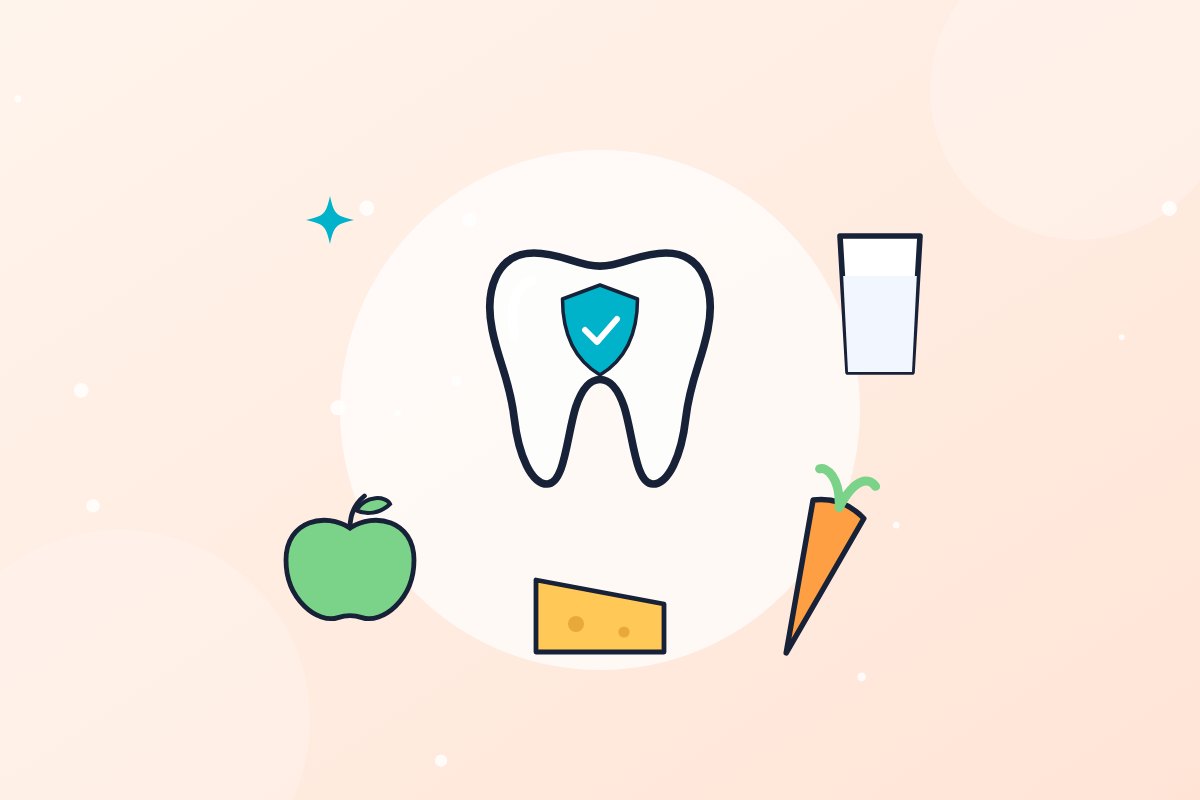
Teeth benefit from foods that provide calcium and phosphorus or stimulate saliva: cheese, dairy, crunchy vegetables, unsweetened nuts and water. The biggest harm comes from frequent sweet snacks, sticky sweets and acidic drinks — fizzy drinks, energy drinks and juices. The rhythm of eating matters too: a few meals a day instead of grazing, and water between meals.
What we eat comes into contact with our teeth before it reaches the stomach. Sugars and acids weaken enamel, while some foods help protect it and support the mouth's natural defences. We suggest what is worth including in your diet, what to avoid and which habits matter most.
- Cheese, dairy, crunchy vegetables and water support dental health.
- Frequent sweet snacking does more harm than one dessert.
- Fizzy drinks, energy drinks and juices combine sugar with acid.
- Calcium, phosphorus and vitamin D are needed to build teeth and bones.
- After acidic food it is better to rinse your mouth and wait before brushing.
Contents
- Which foods are tooth-friendly?
- Which foods do the most damage to teeth?
- Does it matter how often we eat?
- What role do calcium and vitamin D play?
- Is the Mediterranean diet good for teeth?
- Which eating habits protect teeth?
- How much does preventive dentistry cost in Rydułtowy?
- Summary
- Frequently asked questions
Which foods are tooth-friendly?
Teeth benefit from hard cheeses, which raise the pH after a meal and provide calcium, as well as milk and natural yoghurt. Crunchy vegetables such as carrots or celery stimulate saliva when chewed. Unsweetened nuts provide minerals with a low risk of decay. The best drink between meals is water, and unsweetened tea contains polyphenols that inhibit bacteria.
| Food | Why it helps |
|---|---|
| Hard cheeses | raise pH, calcium, casein |
| Milk, natural yoghurt, kefir | calcium and phosphorus |
| Crunchy vegetables | stimulate saliva |
| Nuts (unsweetened) | minerals, low potential to cause decay |
| Oily fish, eggs | vitamin D |
| Water, unsweetened tea | neutral for teeth |
Which foods do the most damage to teeth?
The most harmful are sugary fizzy and energy drinks, which combine sugar with strong acid, and fruit juices, despite their healthy image. Sticky sweets such as boiled sweets, caramels or dried fruit stay on the teeth for a long time. Acidic foods — citrus fruit, vinegar, sports drinks — encourage enamel erosion. Hard foods, e.g. biting ice or fruit stones, can also chip a tooth.
| Food | Risk | How to limit the damage |
|---|---|---|
| Fizzy and energy drinks | decay and erosion | rarely, with a meal, without sipping |
| Fruit juices | sugar and acids | water instead of juice between meals |
| Sticky sweets, dried fruit | long contact between sugar and teeth | with a meal, then water or brushing |
| Citrus fruit, vinegar | enamel erosion | rinse your mouth, brush after 30–60 min |
| Hard snacks | chipping a tooth or filling | do not bite ice, fruit stones or shells |
Does it matter how often we eat?
Yes, the rhythm of eating matters enormously. After every meal or snack containing sugars, the pH in the mouth drops and for about 20–30 minutes the enamel loses minerals. A few meals a day give saliva time to neutralise acids and remineralise the enamel, whereas constant snacking and sipping sugary drinks keeps the teeth in an acidic environment for most of the day.
We describe the mechanism in detail in the article sugar and tooth decay.
What role do calcium and vitamin D play?
Calcium and phosphorus are the main minerals in enamel and bone, and vitamin D is needed for them to be absorbed properly. Vitamin D deficiency in childhood can contribute to problems with enamel mineralisation. In Poland, where sun exposure is insufficient, vitamin D supplementation is recommended — it is worth agreeing the dose with your doctor, in line with current recommendations for your age.
Is the Mediterranean diet good for teeth?
Observational studies suggest that a diet rich in vegetables, fruit, fish, olive oil and nuts, and low in processed sugars, is associated with healthier gums and less decay. Its anti-inflammatory character and low content of simple sugars may be beneficial. It does not replace hygiene, but it supports the health of the gums and the whole body.
Which eating habits protect teeth?
Eat regular meals and cut down on snacking. Have sweet foods with a meal, and drink water between meals. After acidic food, rinse your mouth with water and wait 30–60 minutes before brushing. When you cannot brush, chew sugar-free gum. Drink coffee and tea without sugar and do not sip them for hours. Do not give children sugary drinks in a bottle at night.
- 3–5 meals a day instead of constant snacking.
- Water as your main drink.
- Sweets only with meals.
- Sugar-free gum after eating away from home.
- Fluoride toothpaste twice a day.
How much does preventive dentistry cost in Rydułtowy?
The dentist adjusts how often you need appointments to your risk of decay.
Current prices are listed in our price list. The final cost of treatment is set by the dentist after an examination and consultation.
Summary
Diet affects teeth in two ways: sugars and acids weaken enamel, while foods rich in calcium, phosphorus and vitamin D, and those that stimulate saliva, help protect it. Habits matter most — regular meals instead of snacking, water between meals and sweets only with food. However, diet cannot replace hygiene and regular check-ups.
Frequently asked questions
Does coffee damage teeth?
Coffee can stain teeth, but without sugar it does not strongly cause decay. The problem is sweetened coffee sipped in small mouthfuls over many hours. Drink coffee without sugar, follow it with water and do not sip it throughout the day. Coffee stains are removed during a scale and polish with air polishing.
Can you eat fruit if you have tooth decay?
Yes. Fresh fruit is part of a healthy diet — ideally eaten with meals rather than grazed on throughout the day. Dried fruit, such as raisins or dates, is sweeter and sticky, so it stays on the teeth longer. After acidic fruit, rinse your mouth with water and wait before brushing.
Does xylitol really protect teeth?
Xylitol is not fermented by decay-causing bacteria and does not lower the pH in the mouth. Xylitol gum chewed for a few minutes after a meal stimulates saliva, which neutralises acids. It is a useful addition to prevention, but it does not replace brushing with fluoride toothpaste or cleaning between the teeth.
Does milk strengthen teeth?
Milk and dairy products provide calcium and phosphorus, which are needed to mineralise teeth and bones, and cheese raises the pH after a meal. However, milk contains lactose, so young children should not be given it in a bottle at night, as this encourages decay. It is best to drink milk with meals.
Which snacks are best for teeth?
Good choices are cheese, vegetable sticks, unsweetened nuts, natural yoghurt or an egg. They do not contain many simple sugars, and some of them stimulate saliva. However, it is best to limit the number of snacks, to give your teeth breaks between meals for the enamel to remineralise.
Are ‘zero sugar’ drinks safe for teeth?
Sugar-free drinks do not feed decay-causing bacteria, but many of them, especially fizzy ones, have a low pH and can cause enamel erosion. That is why even ‘zero’ drinks are best drunk rarely, with meals and without sipping over a long time. Water remains the safest drink.
Sources
- World Health Organization — Guideline: sugars intake for adults and children, 2015.
- Moynihan P., Petersen P.E., Diet, nutrition and the prevention of dental diseases, Public Health Nutr, 2004.
- Płudowski P. et al., Clinical practice guidelines for vitamin D in Poland (2023 update), Front Endocrinol.
- Current Dobry Dentysta clinic price list.

Agnieszka Świącik, dentist
Dentist at the Dobry Dentysta practice in Rydułtowy. Medical review of this article.
Book an appointment at Dobry Dentysta in Rydułtowy
Book by phone or via the contact form. In an emergency (severe pain, injury), call us – we will tell you when we can see you.
ul. Ofiar Terroru 24, 44-280 Rydułtowy, Poland · opening hours and directions
Call: +48 575 317 617Contact form