

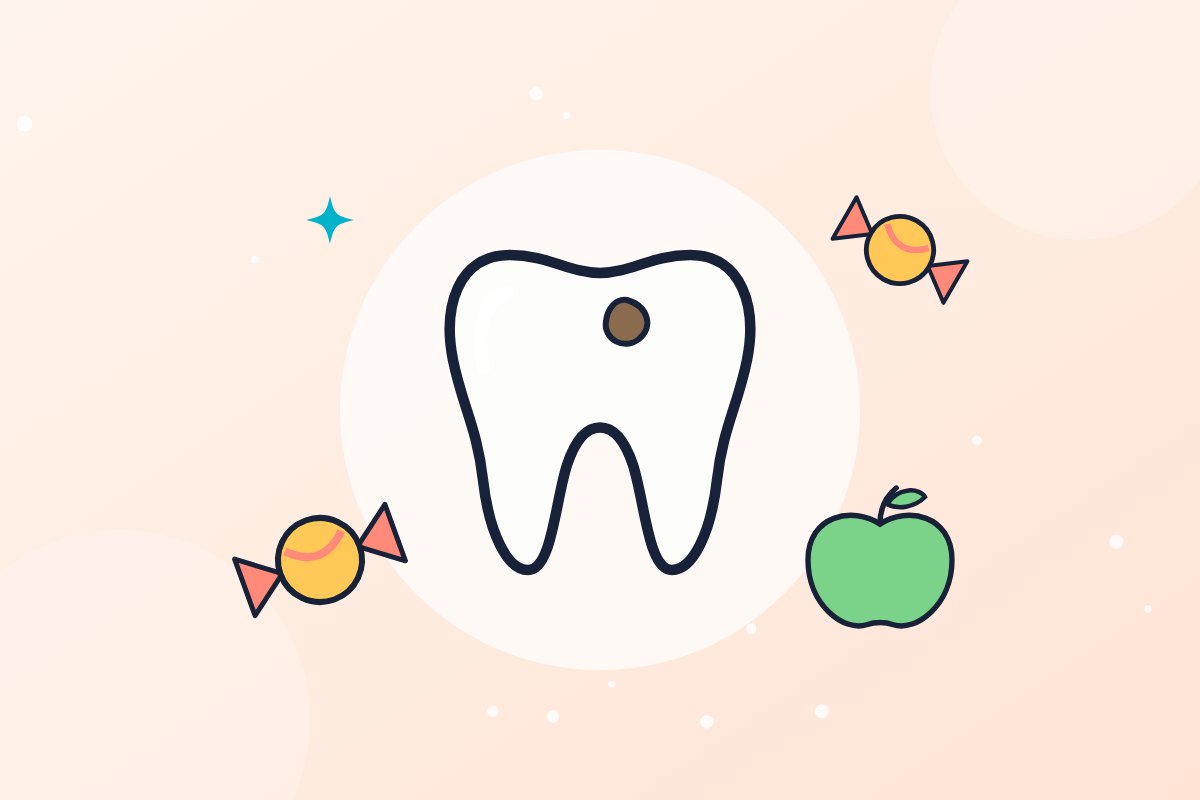
Sugar does not damage teeth directly — the acids that plaque bacteria produce from sugars do. After every sweet snack, the pH in the mouth drops below 5.5 for about 20–30 minutes and the enamel loses minerals. That is why frequency matters more than quantity: it is better to eat sweet things with a meal than to graze throughout the day, and to protect your teeth with fluoride toothpaste.
‘Don't eat sweets or you'll get holes in your teeth’ — advice many of us heard as children. There is a lot of truth in it, but the mechanism is more complex, and what matters is not only what we eat but also how often. We explain how sugar affects teeth and how to limit the damage.
- Decay is caused by acids that bacteria produce from sugars, not by sugar itself.
- After every ‘sugar attack’ the pH drops below 5.5 for about 20–30 minutes.
- Frequent snacking does more harm than one dessert after lunch.
- Sticky starch (crisps, crackers) clings to the teeth for a long time.
- Sugary and acidic drinks combine the risk of decay with enamel erosion.
Contents
- Does sugar damage teeth directly?
- Which sugars are most harmful to teeth?
- Why does how often you eat sweet things matter more than how much?
- How can you eat sweets in a way that does less harm to your teeth?
- Why are sugary drinks particularly harmful?
- Which myths about sugar and teeth are worth busting?
- How much does decay prevention cost in Rydułtowy?
- Summary
- Frequently asked questions
Does sugar damage teeth directly?
No. Sugar is food for decay-causing bacteria, mainly Streptococcus mutans, which live in plaque. The bacteria ferment sugars and produce organic acids that dissolve the minerals in enamel. Without bacteria, sugar would not cause decay, but without sugar the bacteria have nothing to make acids from. That is why prevention combines hygiene with a sensible diet.
We describe the full mechanism of decay in the article how tooth decay develops and how to stop it.
Which sugars are most harmful to teeth?
The most cariogenic sugar is sucrose — ordinary sugar — which bacteria use most efficiently. Glucose and fructose from fruit, honey or juices are also food for bacteria. Processed starch — white bread, crisps, crackers — sticks to the teeth for a long time. Sugar alcohols such as xylitol are fermented by bacteria poorly or not at all and do not lower the pH significantly.
| Type | Examples | Risk to teeth |
|---|---|---|
| Sucrose | sugar, sweets, cakes | high |
| Glucose, fructose | dried fruit, honey, juices | high |
| Processed starch | crisps, crackers, white bread | moderate, clings for a long time |
| Sugar alcohols | xylitol, erythritol | low |
| Intense sweeteners | aspartame, sucralose, stevia | low (not fermented) |
Why does how often you eat sweet things matter more than how much?
Every time you eat sugar, the pH in plaque drops below the critical value of about 5.5, and for about 20–30 minutes the enamel loses minerals. Saliva then gradually neutralises the acids. One dessert after lunch is one such episode, whereas snacking every hour means your teeth are in an acidic environment for most of the day. This was shown, among other things, by the classic Vipeholm studies in Sweden.
| Habit | Number of ‘acid attacks’ | Total time at lowered pH |
|---|---|---|
| Dessert with lunch | 1 | approx. 20–30 min |
| 3 sweet snacks between meals | 3 extra | approx. 1–1.5 h |
| Sipping a sugary drink over several hours | continuous | several hours |
Approximate values; the time depends on factors such as the amount of saliva and the type of food.
How can you eat sweets in a way that does less harm to your teeth?
Eat sweet things with your main meals, not between them. After eating, rinse your mouth with water; chewing sugar-free gum, e.g. with xylitol, for a few minutes stimulates saliva, which neutralises acids. After acidic food, wait 30–60 minutes before brushing, because the enamel is temporarily softened. Use a fluoride toothpaste every day, as fluoride supports remineralisation of the enamel.
- Sweets with a meal, not as a snack.
- Water instead of sugary drinks between meals.
- Sugar-free gum after eating when you cannot brush your teeth.
- Fluoride toothpaste twice a day, especially before bed.
Why are sugary drinks particularly harmful?
Fizzy drinks and lemonades combine sugar, which feeds bacteria, with acids that dissolve enamel directly — this is not only a risk of decay but also of erosion. The way you drink is also a problem: sipping a drink over a long time prolongs the contact between teeth and sugar and acid. Fruit juices, despite their healthy image, also contain sugars and acids.
‘Zero sugar’ drinks do not feed bacteria, but many of them are still acidic and can contribute to enamel erosion. More about diet in the article diet and dental health.
Which myths about sugar and teeth are worth busting?
Myth one: ‘natural’ sugars such as honey or agave syrup are safe for teeth — for bacteria they are just the same food. Myth two: all you need to do is brush straight after eating sweets — after acidic food it is better to wait. Myth three: dried fruit is a healthy snack for teeth — it is sweet and sticky, so it clings for a long time. Myth four: decay is purely down to genes.
How much does decay prevention cost in Rydułtowy?
Current prices are listed in our price list. The final cost of treatment is set by the dentist after an examination and consultation.
Summary
Decay is caused by acids that bacteria produce from sugars, so what matters is not only how much sweet food we eat but how often. Sweets are best eaten with meals, water drunk between meals, and teeth brushed with fluoride toothpaste. It is also worth paying attention to sticky starch and acidic drinks, which harm enamel in two ways.
Frequently asked questions
Is honey safe for teeth?
No more than sugar. Honey contains glucose and fructose, which plaque bacteria ferment into acids, so it causes decay like other sugars. Its antibacterial properties do not protect teeth against decay. Honey is best treated like a sweet — eaten with a meal and never given to children on a dummy or before bed.
Are sweeteners safe for teeth?
Intense sweeteners such as aspartame, sucralose or stevia are not fermented by decay-causing bacteria and do not lower plaque pH, so they do not cause decay. Bear in mind, however, that drinks sweetened with sweeteners are often acidic and can contribute to enamel erosion. Xylitol also helps with prevention.
How does erosion differ from decay?
Decay is the result of acids produced by bacteria from sugars. Erosion is the chemical dissolving of enamel by acids that come directly from the diet, e.g. fizzy drinks and citrus fruit, or from the stomach with reflux — without bacteria being involved. Erosion makes the enamel dull and thinner and causes sensitivity.
Do you need to brush straight after eating sweets?
After sweets that are not acidic, you can brush your teeth after the meal. After acidic food, e.g. citrus fruit or fizzy drinks, it is better to wait 30–60 minutes, because the enamel is temporarily softened. In the meantime, rinse your mouth with water or chew sugar-free gum to speed up the neutralisation of acids.
Is fruit bad for your teeth?
Fresh fruit contains sugars and acids, but also water and fibre, and eating it stimulates saliva. Eaten with meals and in sensible amounts, it is part of a healthy diet. Dried fruit, which is sticky and sweet, and fruit juices, especially when drunk often between meals, carry a greater risk.
Does chewing gum help protect teeth?
Sugar-free gum, e.g. with xylitol, chewed for a few minutes after a meal stimulates saliva, which neutralises acids and supports remineralisation of the enamel. It is a good option when you cannot brush your teeth. However, gum does not replace brushing and cleaning between the teeth. Gum with sugar has the opposite effect.
Sources
- Gustafsson B.E. et al., The Vipeholm dental caries study, Acta Odontol Scand, 1954.
- World Health Organization — Guideline: sugars intake for adults and children, 2015.
- Moynihan P., Kelly S., Effect on caries of restricting sugars intake: systematic review, J Dent Res, 2014.
- Current Dobry Dentysta clinic price list.

Agnieszka Świącik, dentist
Dentist at the Dobry Dentysta practice in Rydułtowy. Medical review of this article.
Book an appointment at Dobry Dentysta in Rydułtowy
Book by phone or via the contact form. In an emergency (severe pain, injury), call us – we will tell you when we can see you.
ul. Ofiar Terroru 24, 44-280 Rydułtowy, Poland · opening hours and directions
Call: +48 575 317 617Contact form