

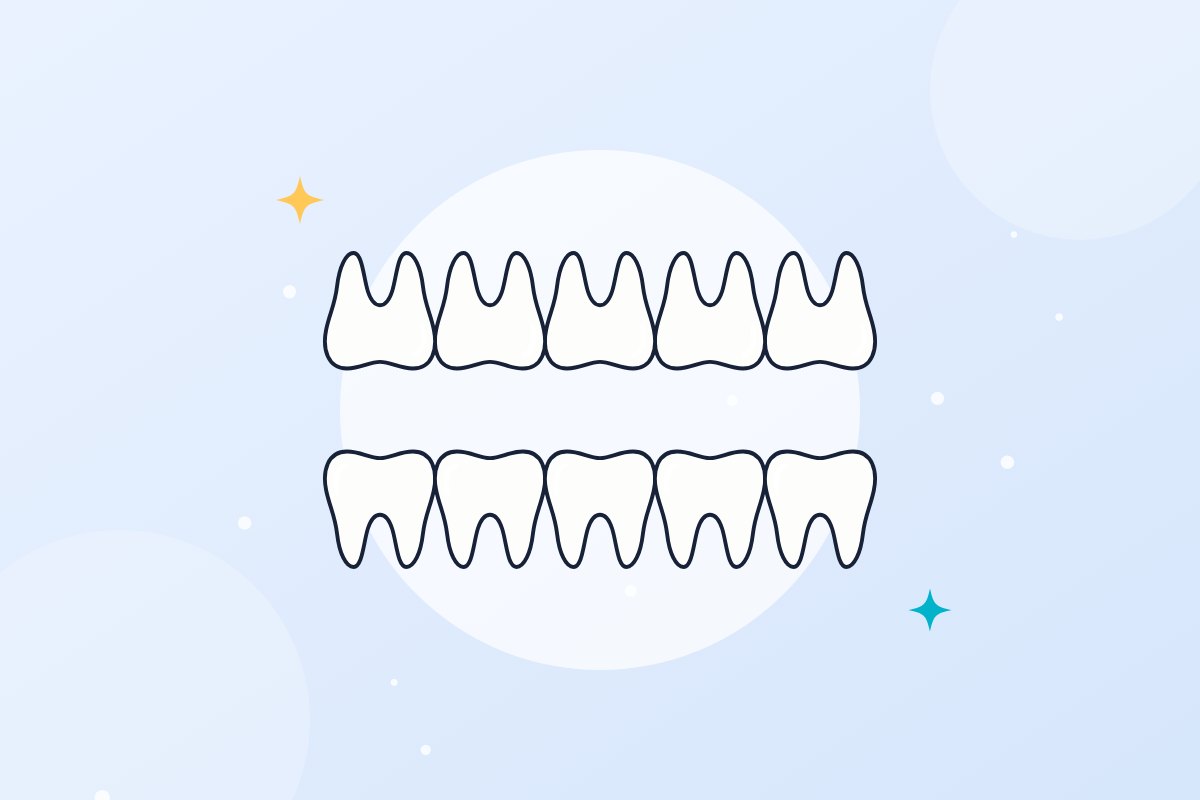
Occlusion is the way the upper and lower teeth meet. A correct bite spreads chewing forces evenly across the teeth and the jaw joints. Bite problems such as a deep bite, open bite, crossbite, overbite (retruded lower jaw) or underbite can contribute to tooth wear and overloading of the joints. Treatment is chosen according to the cause: orthodontics, prosthodontics, a splint or surgery.
We usually think of the bite in terms of appearance — straight teeth and a nice smile. Yet the way the teeth meet also affects chewing comfort, tooth wear and how the joints work. We explain what occlusion is, what the most common bite problems are and how they are diagnosed.
- Occlusion is the way the upper and lower teeth make contact.
- Most common problems: deep bite, open bite, crossbite, overbite, underbite, crowding.
- Bite problems can contribute to tooth wear and overloading of the joints.
- Diagnosis: bite examination, models or scans, X-rays, sometimes CBCT.
- Treatment: orthodontics, prosthetic correction, a splint and, for severe problems, surgery.
Contents
What is occlusion?
Occlusion is the way the upper and lower teeth meet when clenching and chewing. With a correct bite, the forces are spread evenly across all the teeth, and the jaw joints and muscles work without excessive strain. Occlusal problems, e.g. premature or uneven tooth contacts, can contribute to wear, cracked teeth and overloading of the joints.
What types of bite problems are there?
The most common problems are a deep bite, in which the upper incisors overlap the lower ones too much; an open bite, when the front teeth do not meet; and a crossbite, when the upper teeth sit behind the lower ones. An overbite (Angle Class II) means the lower jaw is set back, and an underbite (Class III) means it juts forward. A separate group consists of crowding and gaps, resulting from too little or too much space.
| Problem | What it involves |
|---|---|
| Deep bite | upper incisors overlap the lower ones too much |
| Open bite | no contact between the front or back teeth |
| Crossbite | upper teeth sit behind the lower ones (at the side or front) |
| Overbite (Class II) | lower jaw set back relative to the upper jaw |
| Underbite (Class III) | lower jaw juts forward, lower teeth in front of the upper ones |
| Crowding / gaps | too little or too much space in the arch |
What symptoms can a bite problem cause?
An incorrect bite can contribute to faster wear and cracking of teeth in overloaded areas, pain and clicking in the jaw joints and tension in the jaw muscles. Some people also have morning headaches. However, it is worth remembering that joint and muscle problems usually have many causes — stress, bruxism, habits — and the bite is only one factor.
- Worn and cracked teeth, chipped fillings.
- Pain, clicking, limited mouth opening.
- Tension in the jaw muscles, morning headaches.
- Difficulty biting and keeping teeth clean with crowding.
How are occlusal problems diagnosed?
Diagnosis starts with a history and an examination of the bite, joints and muscles. Tooth contacts are assessed with articulating paper, among other things. The dentist may take scans and make diagnostic models, and if needed order a panoramic X-ray, a cephalometric X-ray or a CBCT scan of the joints. On this basis they determine whether the problem concerns the position of the teeth, the bone, or the function of the muscles and joints.
More about imaging: X-ray diagnostics i CBCT scan.
How are bite problems treated?
Treatment depends on the cause. Misaligned teeth are corrected orthodontically — with braces or aligners. Minor contact problems can be improved prosthetically, e.g. by adjusting premature contact points or with new restorations. An occlusal splint protects the teeth in bruxism and relieves the joints. Physiotherapy can help with muscle tension, and severe skeletal problems require orthognathic surgery.
| Problem | Possible treatment |
|---|---|
| Misaligned teeth | orthodontic treatment |
| Minor contact problems | prosthetic correction, new restorations |
| Bruxism, joint overload | relaxation splint, physiotherapy |
| Worn, damaged teeth | prosthetic restoration |
| Severe skeletal problems | orthodontics + orthognathic surgery |
What to avoid if you have bite problems
It is not a good idea to ‘correct’ your bite yourself with ready-made splints or aligners bought online, or to agree to extensive grinding of healthy teeth without a full diagnosis. It is also a mistake to attribute every headache or neck pain to a bite problem — with such symptoms a medical assessment outside the dental surgery may be needed too. Neglected tooth wear is hard to restore later.
How much does a bite assessment cost in Rydułtowy?
A relaxation splint and prosthetic treatment are priced individually after a consultation, once the dentist has identified the cause of the problem.
| Service | Price |
|---|---|
| Prosthodontic consultation | |
| Orthodontic consultation | |
| X-ray package (panoramic + cephalometric) | |
| Scans | |
| Relaxation splint (night guard) | individual quote |
Bruxism — splint
Relaxation splints that protect teeth and joints.
individual quote
Summary
Occlusion is the way the teeth make contact, and it affects chewing, tooth wear and how the jaw joints work. Bite problems take various forms — from a deep bite to an underbite — and require individual diagnosis. Treatment is chosen according to the cause: orthodontics, prosthetic correction, a splint, physiotherapy and, for severe skeletal problems, surgery.
Frequently asked questions
How can I tell if my bite is correct?
A full assessment is carried out by a dentist, prosthodontist or orthodontist during a bite examination. At home you can check whether your teeth meet evenly on both sides when you close your mouth, whether your lower jaw shifts sideways, and whether your jaw joints click or hurt when you open your mouth. It is worth mentioning any worrying symptoms at your appointment.
Can a bad bite cause neck pain?
The lower jaw, facial muscles and the cervical spine are connected, and in some people problems with the masticatory system occur together with neck tension. However, evidence of a direct causal link is limited. Chronic neck pain needs a medical assessment, and treatment often combines dentistry with physiotherapy.
Is bite correction just about appearance?
No. A correct bite makes chewing and speaking easier and reduces the risk of excessive wear and cracking of teeth and of joint overload. Straight teeth are also easier to keep clean. Appearance is an important reason for treatment, but not the only one — often it is functional considerations that determine whether correction is needed.
Does a bite problem cause bruxism?
According to current knowledge, a bite problem is not the main cause of bruxism. Grinding and clenching are linked above all to stress, sleep disorders and certain medicines or stimulants. However, a bite problem can intensify the effects of bruxism, e.g. wear on particular teeth. A splint protects the teeth whatever the cause.
Can an adult have a bite problem treated?
Yes, orthodontic treatment is possible at any age. In adults, teeth are moved with fixed braces or aligners, and severe skeletal problems may require a combination of orthodontics and orthognathic surgery. The teeth and gums need to be healthy before treatment. The orthodontist sets the treatment plan after diagnosis.
What is selective grinding of teeth?
It is the correction of small, premature tooth contacts by gently grinding selected points so that the teeth meet more evenly. The procedure is only carried out after a thorough diagnosis, because it is irreversible. It is not used as a routine treatment for joint pain or bruxism.
Sources
- Okeson J.P., Management of Temporomandibular Disorders and Occlusion, Elsevier, 8th ed., 2019.
- Lobbezoo F. et al., International consensus on the assessment of bruxism, J Oral Rehabil, 2018.
- Current Dobry Dentysta clinic price list.
Current prices are listed in our price list. The final cost of treatment is set by the dentist after an examination and consultation.
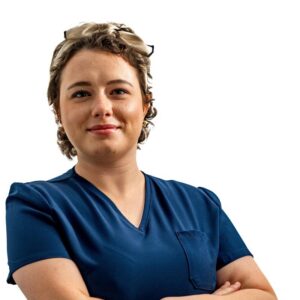
Agnieszka Świącik, dentist
Dentist at the Dobry Dentysta practice in Rydułtowy. Medical review of this article.
Book an appointment at Dobry Dentysta in Rydułtowy
Book by phone or via the contact form. In an emergency (severe pain, injury), call us – we will tell you when we can see you.
ul. Ofiar Terroru 24, 44-280 Rydułtowy, Poland · opening hours and directions
Call: +48 575 317 617Contact form