


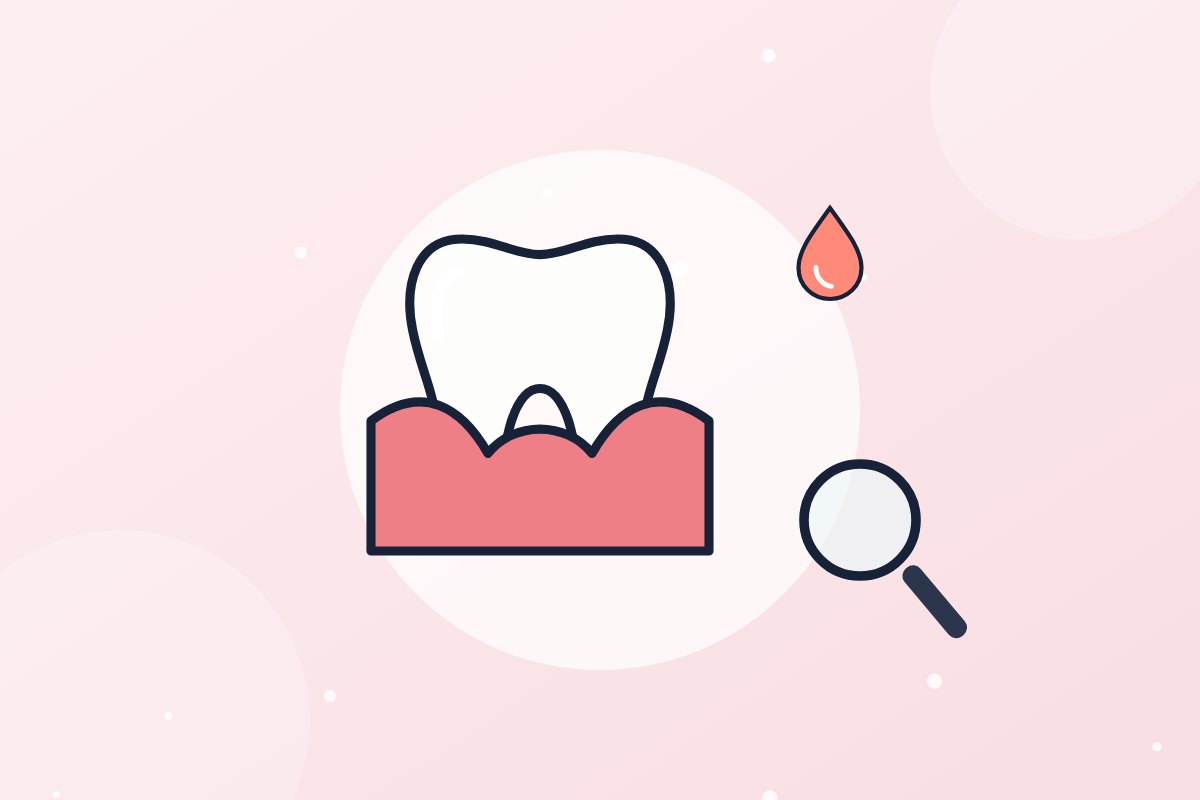
Periodontal disease (known in Polish as ‘paradontoza’) is chronic disease of the periodontium, the tissues that hold a tooth in place. The first symptom is usually gums that bleed when brushing; later the gums recede and teeth may become loose. The main cause is plaque and tartar. Lost bone cannot be rebuilt without surgery, but treatment and good hygiene can stop the disease progressing.
Gum disease develops silently for a long time — it does not hurt, and many people regard bleeding gums as normal. Yet it is one of the more common causes of tooth loss in adults. We explain how to recognise the first symptoms, what increases the risk of the disease and what treatment involves.
- Gingivitis is reversible; periodontitis causes permanent bone loss.
- The first sign: gums bleeding when brushing or flossing.
- The main cause is plaque and tartar; the risk is increased by smoking, diabetes, stress and genes.
- Treatment: cleaning below the gumline and, if needed, curettage, antibiotics or surgery.
- After treatment, check-ups every 3–4 months are essential.
Contents
What is periodontal disease?
Periodontal disease is inflammation of the tissues that hold a tooth in place: the gum, the periodontal ligament, the alveolar bone and the root cementum. The disease has two stages. Gingivitis is reversible and clears up once the plaque is removed. Periodontitis leads to permanent loss of the bone and ligament fibres that support the tooth.
| Feature | Gingivitis | Periodontitis |
|---|---|---|
| Extent | gum only | gum, ligament, bone |
| Reversibility | yes, once plaque is removed | lost bone does not regrow on its own |
| Typical symptoms | bleeding, redness, swelling | receding gums, pockets, loose teeth |
| Treatment | scale and polish, better hygiene | periodontal treatment and check-ups |
What are the symptoms of gum disease?
The earliest symptom is gums that bleed when brushing or flossing. Later the gums become red and swollen and start to recede, making the teeth look longer. Exposed tooth necks react to cold and heat. In the advanced stage there is bad breath, teeth spreading apart and becoming loose, and sometimes a periodontal abscess with pain and swelling.
- Early: bleeding when brushing, red and swollen gums.
- Moderate: receding gums, sensitive tooth necks, bad breath.
- Advanced: loose and spreading teeth, periodontal abscesses.
What causes periodontal disease?
The main cause is bacteria in plaque and tartar, which trigger chronic inflammation. Smoking increases the risk of the disease several times over, as do diabetes, chronic stress, vitamin C and D deficiencies and genetic predisposition. Bite problems that overload particular teeth and some medicines, e.g. certain blood pressure drugs and immunosuppressants, can also play a part.
| Factor | Effect |
|---|---|
| Plaque and tartar | direct cause of inflammation |
| Smoking | several times higher risk; masks gum bleeding |
| Diabetes | more severe disease; the relationship works both ways |
| Genes | stronger inflammatory response to bacteria |
| Stress, vitamin C and D deficiencies | weaker tissue resistance |
| Bite problems, some medicines | overloading or gum overgrowth, harder to keep clean |
How is gum disease treated?
Treatment depends on how advanced the disease is. The basis is thorough removal of tartar and plaque, including below the gumline (scaling and root planing). For deeper pockets, closed curettage is used, and in the active phase sometimes a local or systemic antibiotic. In advanced cases surgery may be needed to expose and clean the root. After treatment, check-ups every 3–4 months are necessary.
The first step is usually a professional scale and polish and an assessment of pocket depth. X-rays are used to assess bone loss — more on our page X-ray diagnostics.
Can periodontal disease be stopped?
Yes, the progression of gum disease can be halted, but it requires treatment and ongoing commitment from the patient. Daily brushing, cleaning between the teeth with floss or interdental brushes, and regular check-ups and professional cleaning are key. Lost bone cannot be rebuilt with home methods — surgery is possible in selected cases — but further bone loss can be stopped.
What not to do when your gums bleed
Do not stop brushing areas that bleed — this is usually a sign of plaque-induced inflammation, and leaving the plaque there makes the problem worse. Do not mask the symptoms with mouthwashes or ‘gum care’ toothpastes without seeing a dentist, and do not assume that bleeding is normal. In smokers the gums bleed less despite disease, so the absence of bleeding does not rule out periodontitis.
How much does a scale and polish cost in Rydułtowy?
The dentist sets the scope and cost of further periodontal treatment individually after the examination.
Current prices are listed in our price list. The final cost of treatment is set by the dentist after an examination and consultation.
Teeth cleaning and scaling
Tartar removal, air polishing and fluoride.
Dental implants
Replacing teeth lost, among other causes, to gum disease.
individual quote
Summary
Gum disease starts innocently — with bleeding gums — and can progress for years without pain, leading to the loss of bone and teeth. The main cause is plaque, and the risk is increased by smoking and diabetes, among other things. Early gingivitis is reversible, and advanced disease can be stopped with treatment, daily hygiene and regular check-ups.
Frequently asked questions
Is gum disease contagious?
Bacteria linked to gum disease can be passed on in saliva, e.g. between partners or from parent to child. However, the mere presence of bacteria does not mean disease — hygiene, immunity and risk factors also determine whether it develops. If one partner is having periodontal treatment, it is worth the other having an examination too.
Does diabetes affect gum disease?
Yes, and the relationship works both ways. Diabetes, especially when poorly controlled, increases the risk and severity of gum disease, and chronic gum inflammation makes it harder to keep blood glucose at the right level. People with diabetes should have their gums checked regularly and tell their dentist about the condition and the medicines they take.
Can teeth be saved with gum disease?
In the early and moderate stages of the disease, teeth can usually be kept if the patient follows the recommendations and attends check-ups. In advanced disease, with clearly loose teeth, treatment slows progression but does not always make it possible to keep all the teeth. The dentist decides on the prognosis for a particular tooth after an examination and X-ray.
Is gum disease hereditary?
The disease itself is not inherited, but a tendency to a stronger inflammatory response to plaque bacteria is. If your parents lost teeth early because of gum disease, it is worth taking particular care with hygiene and having your gums checked more often. Genetic factors do not cancel out the effectiveness of treatment and prevention.
How often should you have a scale and polish with gum disease?
After active treatment is complete, check-ups and professional cleaning are usually recommended every 3–4 months. The dentist sets the exact interval based on the condition of the gums and how effective your home hygiene is. People without gum disease usually have a scale and polish less often, as recommended by their dentist.
Will mouthwash cure gum disease?
No. Mouthwashes can support hygiene and reduce the number of bacteria, but they will not remove tartar, especially from below the gumline, which is the main cause of the disease. Using mouthwash without treatment can mask symptoms such as bleeding and delay a visit to the dentist. Chlorhexidine mouthwashes are used for short periods and only on a dentist's advice.
Does gum disease hurt?
Often not, which is why it tends to be detected late. The early stages show up mainly as bleeding and red gums. Pain usually only appears with complications such as a periodontal abscess, or with sensitivity of exposed tooth necks. So the absence of pain does not mean your gums are healthy.
Sources
- European Federation of Periodontology — S3 Level Clinical Practice Guideline for the treatment of periodontitis stage I–III, J Clin Periodontol, 2020.
- World Health Organization — Global oral health status report, 2022.
- Polish Society of Periodontology (Polskie Towarzystwo Periodontologiczne) — information for patients.
- Current Dobry Dentysta clinic price list.

Agnieszka Świącik, dentist
Dentist at the Dobry Dentysta practice in Rydułtowy. Medical review of this article.
Book an appointment at Dobry Dentysta in Rydułtowy
Book by phone or via the contact form. In an emergency (severe pain, injury), call us – we will tell you when we can see you.
ul. Ofiar Terroru 24, 44-280 Rydułtowy, Poland · opening hours and directions
Call: +48 575 317 617Contact form